Let's name the anxiety first
You've decided to explore solo pleasure for the first time. Maybe you're single, maybe you're in a relationship and want to know your own body better, maybe you're just curious. And now you're sitting with this nervous feeling. Not physical nervousness. Emotional. The kind that whispers things like "What if I'm doing it wrong?" or "What if I can't feel anything?" or "What if this is weird?"
That's not a sign you shouldn't do this. That's your nervous system telling you you're about to do something unfamiliar, and unfamiliar feels risky to the brain, even when it's actually safe. The good news is that nervousness isn't a barrier. It's just information.
Why lemon clitoral vibrators work for first-timers with anxiety
When you're nervous, your body stays a bit guarded. Blood flow concentrates, muscles tense slightly, sensation gets muted. You need a tool that gives you reliable feedback without forcing intensity. That's exactly what a clitoral vibrator like the Lem does.
Unlike penetrative toys, which require a certain level of arousal to feel good, suction-style clitoral vibrators work across the entire arousal spectrum. You can use one at low intensity while still half-anxious, and it will still deliver clear, unmistakable sensation. That feedback is crucial when you're learning. It tells your nervous system "this is real, this is working, you can relax."
The Lem specifically uses gentle suction rather than buzzing vibration. Suction feels less clinical, more like a partner's touch, which matters psychologically when you're bridging the gap between nervousness and pleasure.
The pressure paradox
Here's what I see clinically: first-time solo pleasure anxiety almost always includes a hidden expectation that you should orgasm, quickly, with minimal fuss. That expectation tanks the experience before it even starts.
Orgasm is not the goal here. Exploration is. Your job isn't to reach a destination. Your job is to notice what happens when you're safe, alone, and curious. Some nights you'll orgasm. Some nights you won't. Both count as a win because both are data about your own pleasure.
This matters because the pressure to perform, even for an audience of one, keeps your nervous system in sympathetic mode (fight-or-flight territory). And you can't access pleasure while you're scanning for threats.
How to set yourself up for actual relaxation
Four things that matter more than the toy itself.
Time and privacy. Don't squeeze this into a 10-minute slot between work and dinner. Give yourself at least 30 minutes with zero chance of interruption. Lock the door. Put your phone in another room. Your nervous system needs to know it's actually safe, not just logically safe.
Warm-up matters. Don't go straight to the vibrator. Spend 10-15 minutes just touching yourself. Over your clothes, under your clothes, whatever. Let your nervous system acclimatize to the experience of being touched by you. This sounds simple but it's the part that tips the scales from anxiety to curiosity.
Temperature and comfort. Take a warm bath or shower first. You're not trying to be sexy for anyone else. Warmth genuinely lowers anxiety and increases blood flow to your genitals. Fresh underwear or no underwear. Whatever makes your nervous system go "okay, this is fine."
One intentional boundary. Decide in advance what you're not going to do. Maybe it's "I'm not going to use the penetrative setting." Maybe it's "I'm going to keep my eyes open so I don't dissociate." Maybe it's "I'm setting a timer for 20 minutes so I don't overthink." That one boundary paradoxically creates permission for everything else.
Your first time with the toy
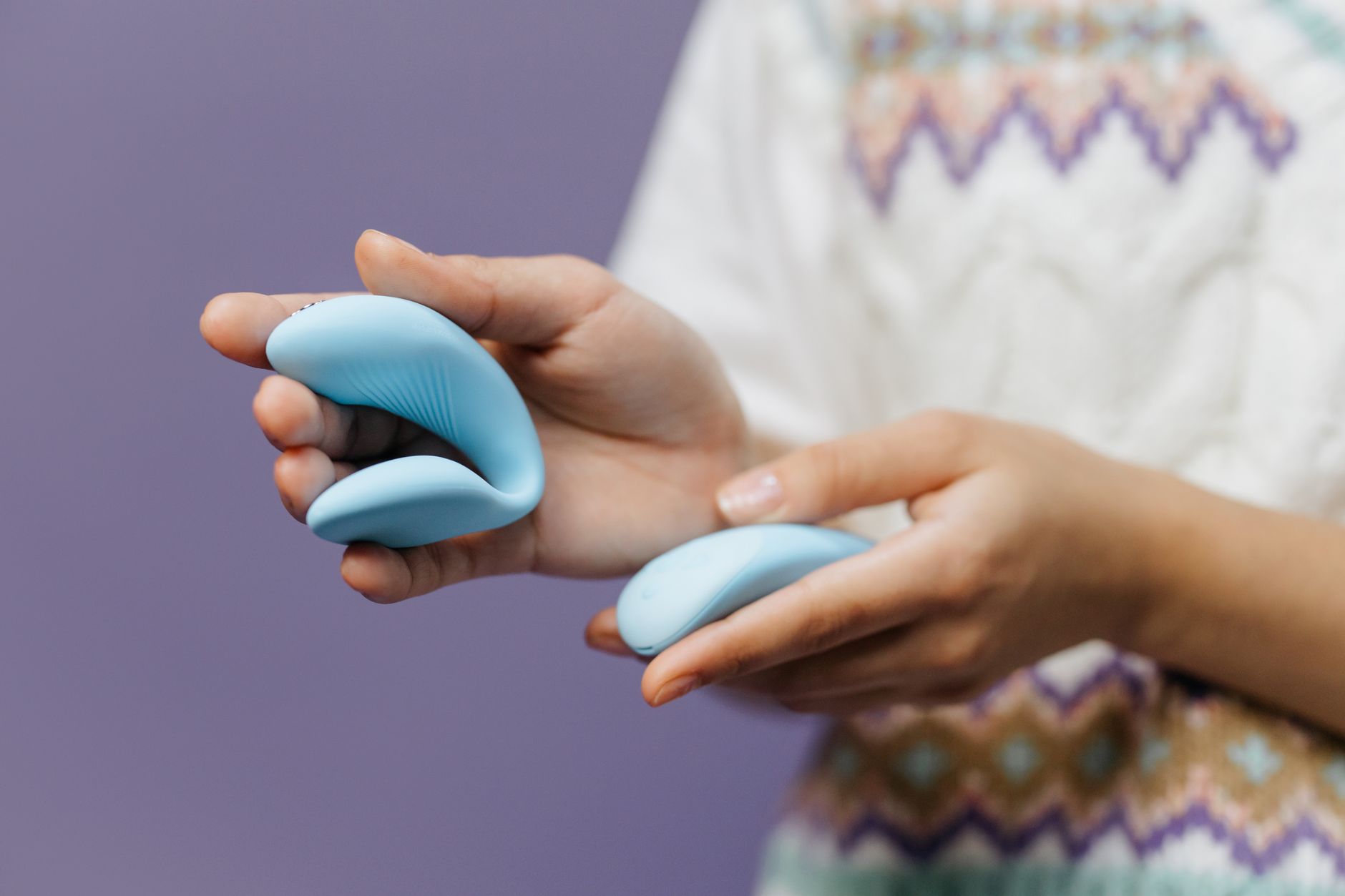
Take the lemon vibrator out. Look at it. The design matters here because you're not dealing with clinical-looking equipment. It's cute, it's intentional, it's yours. That matters for your nervous system.
Start at the lowest setting. Don't jump to intensity. Place it gently against your clitoris, not on it yet. Notice what you feel. Temperature, vibration pattern, pressure. Just data. No judgment.
Move it slowly. You're not searching for the magic spot. You're mapping. Try the side of the clitoris, the hood, the upper area. Some spots will feel better than others. That's information.
If you feel nothing, that's not failure. That means your nervous system is still in protection mode. That's fine. Back off the intensity, slow down the movement, focus on your breath. You're not running out of time.
If you feel pleasure, stay curious. Don't chase it. Don't grip it mentally like "I need to make this turn into an orgasm." Just notice: warmth, tingling, building sensation, whatever's actually there.
What might surprise you
Most first-timers expect pleasure to feel like what they've seen or read about. It usually doesn't. It might feel gentler. It might feel more localized. It might build slower. It might not be dramatic at all. It might feel like a pleasant building sensation that plateaus, never peaks. That's completely normal and completely valid.
The other thing that surprises people: solo pleasure feels different from partnered pleasure. Not worse, not better, just different. You're in charge of speed, pressure, rhythm. There's no performance element. That can feel liberating or strange or both at the same time. All normal.
Some first-timers also report that the anxiety doesn't disappear completely during the first few times. It just gets smaller and quieter in the background. That's actually healthy. It means your nervous system is slowly updating its threat assessment. "Oh, this is a safe space. We can stay curious."
The conversation with yourself afterward
After you're done, don't immediately jump back into your day. Spend five minutes just lying there. Notice how your body feels. Notice your mood. You don't need to draw conclusions or analyze. You're just gathering information about what happened.
If it felt good, great. If it felt awkward, that's also fine. Awkwardness on a first try is data, not failure. If you felt nothing, that's fine too. Some people need multiple attempts before their nervous system fully relaxes.
This is not a pass-fail test. This is you getting to know your own body in a context where there's zero external pressure. That alone is the entire point.
When to reach out for help
If you're experiencing pain, that's worth mentioning to a doctor. Not shame, just practical information. Same if you've tried multiple times and your nervous system still won't relax. You might benefit from working with a therapist who specializes in sexual health or anxiety. How to use lemon vibrators when you feel disconnected from your own pleasure covers some of this territory too.
If you're wondering whether adding a partner to the mix would help, the answer is: explore solo first. Solo pleasure teaches you what your body actually wants, separate from what you think you should want or what a partner might want. That information is gold when you eventually bring someone else in.
People also ask
Is it normal to feel anxious about using a vibrator for the first time alone?
Completely normal. New sensations, new vulnerability, new context for your own body. All of that triggers some nervousness in most people. That nervousness isn't a sign you shouldn't do this. It's your nervous system saying "this is unfamiliar." Unfamiliar isn't dangerous. It's just new. The nervousness usually fades after the first attempt or two, especially when you approach it with curiosity instead of pressure.
What if I can't orgasm with a lemon vibrator?
Then you're gathering valuable information about your body. Orgasm is one outcome, not the only outcome. Some people need more time to relax. Some need different types of stimulation. Some have medical or psychological factors that affect orgasm, and that's worth exploring with a healthcare provider. The Lem is a starting point, not a magic fix. Your job is to notice what feels good, regardless of whether it leads to orgasm.
How long should my first solo session last?
There's no rule. Some people are comfortable with 10 minutes. Some want 45 minutes. The only real guideline is: don't approach it like you're racing to a finish line. Give yourself enough time to warm up mentally and physically, experiment without pressure, and then stop when you feel done. Done doesn't have to mean orgasm. It can mean "I'm satisfied with what I learned" or "I feel tired and ready to move on."
Should I use lubricant with a lemon clitoral vibrator?
You don't need it for external clitoral stimulation, but some people like it anyway. A small amount of water-based lubricant can reduce friction and make the sensation smoother, especially if your skin is sensitive or dry. It's optional. Experiment and see what your body prefers. If you do use lube, use water-based only. Silicone-based lube can damage the toy.
What if I feel disconnected or numb during the experience?
That's often a sign your nervous system is still in protection mode. You don't have to push through it. Back off the intensity, slow down, take a few deep breaths, try again. Sometimes it takes multiple sessions before the nervous system fully relaxes enough to access sensation. If numbness is persistent across multiple attempts, it's worth mentioning to a doctor because it could point to medication side effects, hormonal changes, or other factors worth exploring.
Is solo pleasure with a vibrator different from what I'll experience with a partner?
Yes, and that's by design. Solo pleasure is about you, your pace, your preferences, zero performance pressure. That's valuable information. When you eventually bring a partner in, you'll already know what your body likes, which makes communication easier and the experience better for both of you. There's no competition between solo and partnered pleasure. They're just different contexts.
Your pleasure matters. Solo exploration isn't selfish. It's foundational. You deserve to know your own body in a space where there's zero pressure and zero judgment. That space is what you're building here.