
Here's the thing nobody says out loud
Most couples don't introduce a vibrator because they're bored. They introduce one because someone is nervous about bringing it up, and the longer they don't, the more loaded the conversation becomes. By the time you actually say it, there's months of imagined rejection packed into those three sentences. Which is why the conversation often goes badly.
The good news. If you frame it right, this doesn't have to be weird. And a lemon clitoral vibrator like the Lem actually makes the experience easier because it's not about penetration. It's about adding a specific kind of sensation that exists outside the dynamic you already have.
The conversation before you even buy anything
Don't lead with "I want to use a vibrator." That sounds like a complaint. Lead with curiosity instead.
Try: "I've been thinking about trying something new in bed. Would you be open to exploring that together?" That opens the door without loading it with expectation. If your partner says yes, then you can get specific.
Or: "I read that a lot of people get more intense orgasms with a clitoral vibrator. I'm curious if that's something you'd want to try together." That's practical, not rejecting. That's information, not accusation.
If your partner shuts it down immediately, don't push. But do ask why. Sometimes the resistance isn't about you. Sometimes they think vibrators are only for solo sex, or they're worried about being "replaced," or they think it's a sign you're not satisfied. Once you know the actual objection, you can address it. "Replaced" is different from "I don't like the idea," and you need to know which one you're dealing with.
Why people actually resist (and how to respond)
I've worked with hundreds of couples. The objections cluster into three categories.
"It feels like a replacement for me." The worry is that the vibrator will become the main event and you'll stop wanting your partner. Be honest. You might actually orgasm more easily with the vibrator. That's not because they're worse. That's because clitoral stimulation is a specific stimulus, and your body responds to specific stimuli. Their hands might feel incredible when you're relaxed. The vibrator might be what gets you there when you're in your head. Both things are true. The reassurance your partner actually needs isn't "I don't need it," it's "I want to use this WITH you."
"I don't know how to use it." Your partner doesn't want to feel incompetent. Show them that you're figuring this out together, not that you're already an expert. Use the vibrator on yourself first. Let them see how you respond. Then invite them to hold it, control it, be part of the experience. That's partnership.
"It feels clinical or unsexy." Some people think vibrators are medical devices, not part of "real" sex. The counterpoint is boring but true. Whatever gets you both off is real sex. A vibrator isn't less intimate. It's different. It might actually be more intimate because it's something you're trying together, which takes vulnerability from both of you.
The first time you actually use it together
Don't start with it during sex. Start with it during foreplay when the pressure is lower and you both have space to focus on sensation rather than performance.
Here's what works:
Start with lower intensity patterns. The Lem has multiple settings. Begin at pattern 1 or 2, even if you think you want something stronger. The goal is to get used to having your partner there while you're experiencing the vibration. That takes mental space. High intensity is a distraction when you're already managing the emotional newness.
Keep communication simple. "How does this feel?" and "What if I tried here?" are good checks. But don't narrate everything. That kills the mood. You're not conducting a survey. You're exploring.
Give yourself permission to laugh or feel awkward. The first time you use a lemon sexual toy with your partner, there's often a moment where the absurdity hits and you both want to die of embarrassment. That's normal. Laugh about it. Weirdness is just intimacy that hasn't settled yet.
What actually changes once you're comfortable
After a few times, the vibrator stops feeling like a thing you're using and starts feeling like part of your bodies. Your partner might hold it while you're together. You might take turns controlling it. You might find that certain positions work better with it. You discover rhythm.
Honestly, one of the most common patterns I see is that the vibrator becomes something you reach for when you want a specific type of pleasure, not as a default. Some nights it's there. Some nights it's not. And that's fine. You have options now.
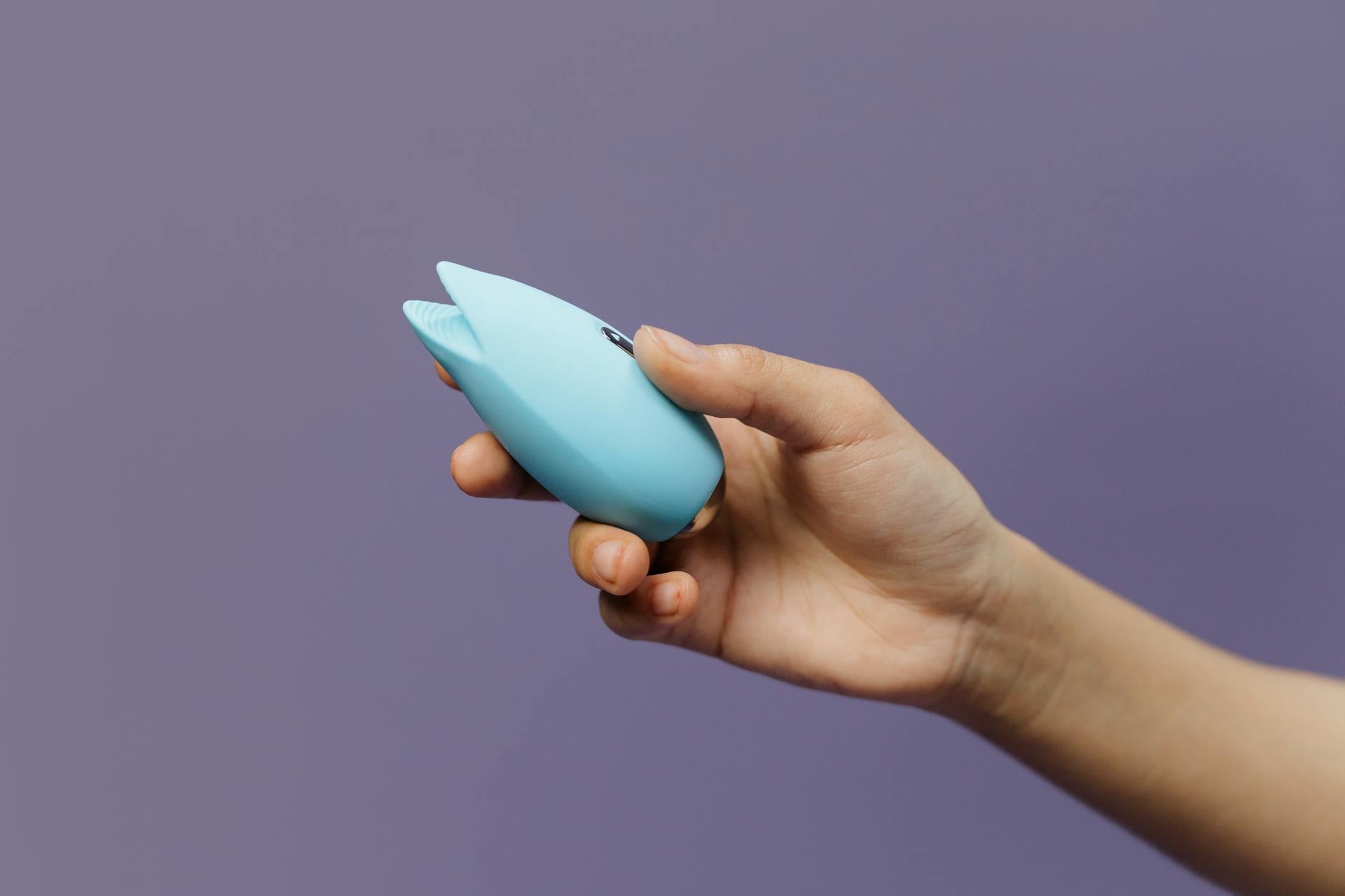
Photo by cottonbro studio on Pexels
When desire mismatches happen
Here's the reality that nobody wants to say. Sometimes you introduce a vibrator because you want sex to feel better, and your partner agrees, and then it becomes clear that what you actually want is different from what they want. That's not the vibrator's fault. The vibrator just revealed what was already there.
If one partner is much more enthusiastic about using it than the other, don't interpret that as rejection. It might just mean you need different things. One partner might love it as part of regular sex. The other might want it only sometimes. That's a conversation, not a problem. Lots of couples have that conversation.
If you're the one who's less enthusiastic, give it real time. The first few uses feel weird. By the fourth or fifth time, you might find you actually like it. Or you might not. But at least you'll know from experience, not from assumption.
The lemon clitoral vibrator conversation specifically
If you're introducing your partner to a lemon clitoral vibrator, you're not introducing penetration play. You're introducing external stimulation that's usually reserved for solo time. That can feel less intimidating than other toys. It's not about being inside. It's about sensation. That's worth naming when you have the conversation. "This is just for clitoral pleasure, which is something we can share." That sounds less complicated than it feels.
Making sure you both actually want this
This is the part that matters most. Check in with yourself before you check in with your partner. Do you actually want to use a vibrator? Or do you think you should? There's a difference.
If you're doing this because you saw it online or your friend mentioned it, pause. You don't have to want the same things your friends want. If you're doing this because you've never had an orgasm with your partner and you're hoping the vibrator fixes it, that's real. That's worth exploring. But do it knowing that the vibrator is a tool, not a solution.
And check in with your partner the same way. Are they saying yes because they actually want to, or because they don't want to disappoint you? Those lead to very different experiences. You want enthusiastic yes, not compliance.
If you're both genuinely curious, you're halfway there. The rest is just showing up, being patient with the awkwardness, and remembering that your partner is also nervous. You're both figuring this out together. That's already more intimate than most people get.
FAQs about using a lemon vibrator with your partner
Can using a vibrator together make us closer or will it create distance?
It depends entirely on how you frame it. If the vibrator becomes a tool you're using together to explore something you both want, it often deepens connection because you're doing something vulnerable at the same time. If one person pressures the other or frames it as a fix for what's "wrong," that creates distance. The tool isn't the variable. Consent and genuine curiosity are.
What if my partner doesn't orgasm with the vibrator the first time?
Orgasm isn't the goal of introducing a toy. Sensation and exploration are. Some people take longer to feel comfortable with a vibrator present. Some need to get used to the feeling. If the first time is just pleasant experimentation with no orgasm, that's still a win. You're building the foundation for later.
Should I use the vibrator on my partner too or just on myself?
That's something you decide together. Some people love having their partner use the vibrator on them. Some prefer to control it themselves. Some couples take turns. There's no rule. What matters is that both of you feel like you have agency in how it's used.
Is it weird if my partner wants to watch me use the vibrator on myself as part of our sex?
Not at all. That's actually really common and it's incredibly intimate. You're letting them see you pleasure yourself, which is vulnerable. If you're comfortable with it, that's a beautiful form of connection. If you're not, say so. But don't assume it's weird if they ask.
What if I want to use a vibrator with my partner but they think they'll feel inadequate?
This is about reframing. The vibrator isn't replacing anything. It's adding. Your partner's hands, body, and presence are irreplaceable. The vibrator is one tool among many. A concrete way to address this. Use the vibrator while your partner is touching you in other ways. That makes it clear they're still central to the experience.
How often should we use the vibrator if we start using it together?
There's no prescription. Some couples use it most times they have sex. Some use it occasionally. Some use it for a few months and then stop. All of that is fine. What matters is that you check in occasionally about whether you both still want it. Desire changes. Your toy use can change with it.
What comes after the first time
Once you've used a lemon clitoral vibrator together and you've both survived the awkwardness, you get to decide what happens next. Some couples discover they want to explore other toys. Some find that the vibrator becomes a regular part of their sex life. Some use it a few times and never think about it again.
The point isn't to have vibrators in your sex life forever. The point is that you had a conversation that mattered, you tried something together, and you did it as a team. That's the win. The actual vibrator is secondary.
If you're nervous about bringing this up with your partner, remember this. The conversation is harder than the actual experience. Once you've named it, discussed it, and tried it, the weirdness dissolves faster than you'd expect. And you'll have something most couples don't. You'll have done something vulnerable together. That's rare. That's worth the awkward five minutes of setup.
Start with curiosity. Lead with honesty. And give each other permission to feel shy about it. That's how you make it work.