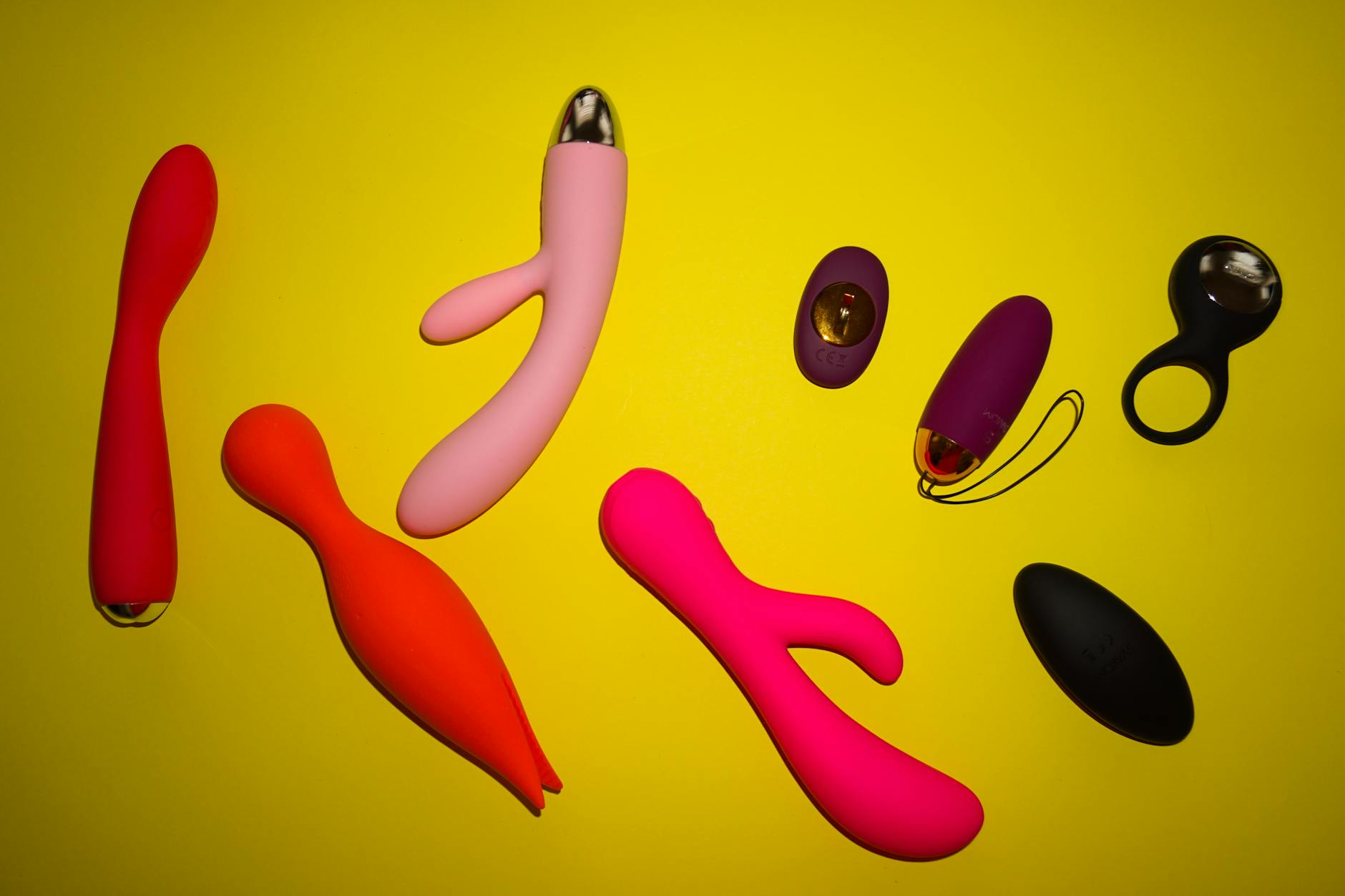
Here's what happens mid-cycle
About fourteen days into your cycle, your body releases an egg. That hormone surge (estrogen at its peak, then a sharp rise in luteinizing hormone) does something wild to pleasure. Your clitoris becomes engorged with blood. Nerve endings wake up. The threshold for sensation drops. What felt gentle three days ago now feels electric.
This is not an accident. It's evolutionary design. Your body is literally advertising its fertility window, and one way it does that is by making pleasure feel more intense, more immediate, more undeniable.
The problem is that most vibrators don't account for this shift. A pattern that worked perfectly during other phases of your cycle can feel too sharp, too much, too overstimulating when sensitivity peaks. That's where understanding your own mid-cycle patterns matters, and where the design of a lemon clitoral vibrator actually becomes an advantage.
Why peak sensitivity needs a different approach
During the luteal phase (after ovulation), or during menstruation, many people can tolerate stronger, faster patterns on clitoral vibrators. Mid-cycle, the tissues are more reactive and nerves are already primed. Adding aggressive vibration on top of that can tip from pleasure into discomfort in seconds.
The suction-based design of tools like the Lem works differently than a traditional vibrator. Instead of rapid pulses, it uses rhythmic suction that builds sensation gradually. For mid-cycle peaks, this matters because you get intensity without the jarring sensation that can feel overstimulating when your body is already at high alert.
Think of it this way. A traditional vibrator at mid-cycle is like turning up the volume on a song that's already playing loud. Suction is more like turning up the bass. Different quality, different entry point into intensity.
What changes in your body mid-cycle
Three physiological shifts happen that directly affect how vibrators feel.
Clitoral engorgement. The erectile tissue of your clitoris fills with blood. You might notice it feels slightly swollen or tender. This heightened state means less stimulation triggers more response. Your sensitivity ceiling is genuinely higher, but your floor is lower too. Touch that felt pleasant on day seven might feel uncomfortable on day fourteen.
Cervical position changes. Your cervix rises slightly during the fertile window, which shifts the angle of your internal pelvic organs. If you use a toy that targets both external and internal zones, you might notice the angle of approach matters more mid-cycle than it does during other phases.
Lubrication increase. Your body produces more natural lubrication mid-cycle, which is great for comfort but can also change the tactile experience. Wetter environments sometimes require less added lubricant, which can be a relief if you find water-based lubes uncomfortable mid-cycle for any reason.
How to adjust your patterns
If you use the Lem or another lemon sucker vibrator, your settings strategy should shift mid-cycle.
Start at pattern one or two. This might feel conservative compared to your usual starting point, but it's actually smart. Your body is already in a heightened state. You're not looking to compensate with intensity. You're looking to build with the arousal that's already present.
Stay in the lower ranges longer. Instead of ramping up to pattern four or five within five minutes, plan to spend ten to fifteen minutes in patterns one through three. This extended building actually deepens arousal more reliably during peak sensitivity than jumping straight to higher settings.
Pay attention to the pause. Many clitoral vibrators, including the Lem, have rhythmic patterns with built-in pauses. Mid-cycle, these pauses become your friend. They give your increasingly sensitive nerves micro-recoveries without losing the stimulation entirely. If you typically use continuous patterns, try the rhythmic ones mid-cycle and notice the difference.
Don't assume you need vibration at all. This is wild, but some people find that mid-cycle, suction alone (without any vibrational patterns) is more than enough. The Lem has a no-pulse suction-only setting. Try it. You might find that peak sensitivity actually means less mechanical input, not more.
When overstimulation creeps in
Overstimulation mid-cycle feels different than it does other times. You might notice it as a sharp sensitivity that borders on pain, a feeling of numbness right when you want to feel more, or a sudden loss of pleasure that came out of nowhere.
If that's happening, three immediate shifts help.
Pull back to suction only. If you're using a pattern with vibration, remove the vibration layer. Suction-only sensation mid-cycle can feel just as intense but without the stacked sensory input.
Move your starting point. You might be starting at the most sensitive area. Try beginning with the Lem or another clitoral vibrator applied slightly off-center, or at the sides of the clitoris rather than directly on the head. You can always move to your preference once you're more warmed up.
Add time instead of intensity. If you hit a sensitivity wall mid-cycle, the solution is usually more time at lower settings, not higher settings. Step back to pattern one. Give yourself fifteen minutes instead of five. Your body will get there without triggering the overstimulation response.
Mid-cycle and partners
If you have a partner, mid-cycle sensitivity is worth naming explicitly. Your responsiveness during this window is real, but it also means what felt right last week might feel too much now. That's not a flaw or a rejection. It's information.
Some people love bringing a lemon vibrator into partner sex specifically during peak sensitivity because the suction-based design gives you agency over your own pleasure while staying connected. You're not handing over control of your sensation to someone else's rhythm. You're holding the device, controlling the pattern, and your partner is present in other ways.
This matters because mid-cycle is often when desire peaks, but desire without comfort is frustrating. A design that lets you modulate your own sensation mid-cycle actually deepens shared pleasure instead of complicating it.
Tracking your own cycle is the real tool
All of this only works if you notice your actual patterns. Not everyone's cycle is twenty-eight days. Not everyone peaks at the textbook fourteen-day mark. Some people are more sensitive mid-cycle. Others barely notice a shift.
The real move is tracking what changes for you. Use your phone notes, a period app, or literally a calendar. Mark the days you use a clitoral vibrator, note what pattern felt best, and log your baseline sensitivity. Three cycles of that data gives you a personal roadmap that beats any generalized advice.
Mid-cycle is when your body is broadcasting something real about your capacity for pleasure. Learning to listen to that signal, and using tools like lemon vibrators that can adapt to shifting sensitivity, turns a biological fact into an asset.
Frequently asked questions
Does the Lem work differently during different phases of my cycle?
Yes. The suction-based design of the Lem is particularly well-suited to peak mid-cycle sensitivity because it builds sensation gradually without the sharp, rapid pulses of traditional vibrators. Many people find they use lower patterns mid-cycle and higher patterns during other phases. The Lem's range means you're not replacing the toy. You're just adjusting how you use it.
Can peak sensitivity mid-cycle cause pain with lemon vibrators?
No, but overstimulation can. The difference is important. If you're experiencing pain, it's usually because the intensity is too high for your current sensitivity level, not because the toy itself is wrong. Pulling back to lower patterns, starting off-center, or using suction-only mode solves this. If sharp pain persists, that's worth mentioning to a healthcare provider because it might signal something unrelated to your cycle.
Should I stop using vibrators during peak sensitivity?
Not unless they're causing actual pain. Peak sensitivity just means you need different settings, not no settings. Many people have their most satisfying experiences with clitoral vibrators mid-cycle because their body is primed for pleasure. You're working with that physiology, not fighting it.
How long does mid-cycle sensitivity actually last?
Usually three to five days around ovulation, though it varies. The most intense window is typically the day before and day of ovulation. If you're tracking your cycle, you'll notice this window shifts slightly each month depending on your individual hormones. That's why tracking matters more than memorizing a date.
Can I use a lemon clitoral vibrator during my fertile window if I'm trying to conceive?
Yes, absolutely. Pleasure and conception are compatible. If you're timing intercourse, the mid-cycle sensitivity you're feeling is actually a sign your body is fertile. Using a clitoral vibrator solo or with a partner doesn't interfere with conception. Some people find that orgasm during the fertile window feels especially powerful, which is your nervous system doing exactly what it evolved to do.
What if my sensitivity mid-cycle feels too much even at the lowest setting?
Try suction-only mode without any pulse or pattern. Some people find that pure suction (if their toy offers it) gives them the sensation they want without the layered intensity of suction plus vibration. You might also try applying the device through fabric, which softens sensation slightly. And honestly, some days your body just wants a break. That's valid too.