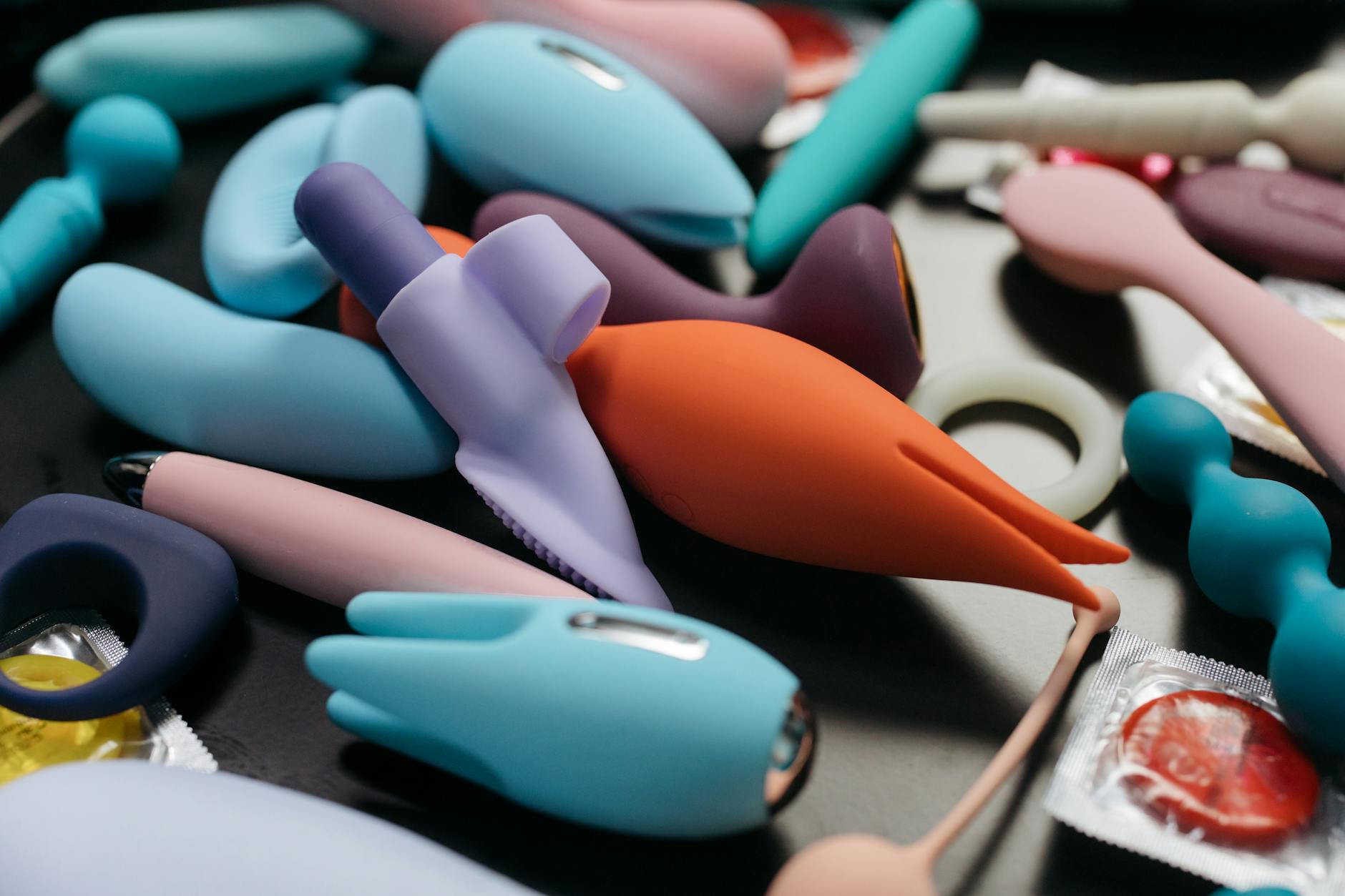
When one of you wants penetration and the other needs clitoral stimulation
Let's be real. This is the single most common thing couples argue about without actually naming it. One partner reaches for penetration. The other partner reaches for clitoral touch. Both feel ignored. Both feel like they're asking too much. Neither realizes this isn't a compatibility problem. It's a tool problem.
About 75% of people with vulvas need direct or indirect clitoral stimulation to orgasm during partnered sex. About 50% find penetration alone insufficient for arousal. Meanwhile, partners offering penetration often experience it as the primary or most satisfying form of connection. So you end up with two people having two different types of sex at the same time, wondering why neither feels fully satisfied.
Enter the lemon vibrator. Not as a replacement for your partner. As the missing piece that lets you both have the sex you actually want.
Why standard vibrators don't solve this
Most vibrators force a choice. A wand vibrator works brilliantly for clitoral stimulation but awkwardly during penetration. A couple's vibrator buzzes between the vulva and partner's penis, but neither partner controls their own sensation. A traditional vibrator requires your partner to hold it while moving inside you, which divides their attention and often kills the rhythm.
The lemon clitoral vibrator changes this because of one design fact: it's handheld, compact, and designed specifically for external clitoral stimulation without taking up space during penetration. You hold it. You control the pressure. You control when and how much stimulation you want. Your partner controls penetration depth and pace. No negotiation mid-stroke. No dropped rhythm. No "is this working for you" every thirty seconds.
It's simple. It's the opposite of complicated.
How to position it during penetration
Three positions work well, depending on what feels natural for you both.
Position one: You on top. Your partner lies back. You're sitting on them, controlling depth and pace. Your hand holds the lemon vibrator against your clitoris. You set the pattern, the intensity, everything. Your partner feels you moving and controlling your own pleasure. Many couples find this orientation feels most connected because you can see each other and adjust together.
Position two: Spooning from behind. Your partner enters from behind while you lie on your side. Your front hand is free to guide the lemon vibrator. This angle gives your partner a view of what you're doing, which many people find intensely arousing. Communication here is easy because you're close to each other's ears.
Position three: You on your back. Your partner is positioned for penetration. One of your hands guides the lemon clitoral vibrator. The other hand can explore your partner's body, setting up more connection points. This position is straightforward and leaves both partners' hands relatively free.
Each position has a learning curve of about three times before it feels automatic. The key is picking one and practicing it a few times before expecting perfection.
The rhythm conversation (the part nobody talks about)
Here's what makes or breaks this whole thing: your partner needs to understand they're not controlling your clitoral stimulation. You are.
That sounds obvious. It's not. A lot of partners unconsciously try to sync their thrusting pace with the vibrator's pattern, thinking faster penetration means they should crank up the clitoral intensity. Nope. Your clitoral sensitivity and your desire for penetration depth move independently. You might want hard, fast penetration and barely perceptible clitoral stimulation. Or slow, gentle penetration with intense suction from a lemon vibrator.
Before you start, say this out loud: "I'm going to control this vibrator. You control your pace. We'll find our rhythm together, but we're not syncing them."
Then actually do that. After a few times, your bodies remember. Your partner stops fighting the urge to match your clitoral rhythm to their penetration rhythm. You stop overthinking the timing. You just move.
Why the lemon vibrator specifically works here
A lemon clitoral vibrator is built for external stimulation only. It doesn't vibrate inside. It doesn't try to do dual duty. It does one thing beautifully: create consistent clitoral sensation through either pulsing vibration or suction patterns.
The suction function of a lemon vibrator mimics a very specific type of oral sensation without friction. For people who find traditional vibrators too intense during partnered sex, suction at patterns one through three is often perfect. It's strong enough to register. It's not so aggressive that it overrides everything else happening.
The weight is light. Holding it for 15 or 20 minutes doesn't fatigue your hand the way larger vibrators do. The shape is intuitive. You're not fumbling around trying to find the right angle.
And honestly, most people find the psychological permission of using the lemon vibrator during partnered sex shifts something. You're not improvising. You're using a tool designed for exactly this. Your partner isn't wondering if they're doing something wrong. You're both leaning into a solution.
Communication actually gets easier
When you're not trying to extract all your pleasure from your partner's body alone, you stop resenting them for not being enough. This sounds dramatic. It's not. You're literally removing the expectation that one person's body can simultaneously deliver the exact sensations you need at the exact pace your nervous system wants.
Your partner stops trying to guess what you need. You stop holding frustration about what they can't provide. The sex becomes collaborative instead of adversarial.
Talk about it afterward if something felt off. Not during. During is for sensation, not diagnostics. After, when you're both calm, say what worked and what didn't. "I loved when you moved faster." "I want to try more suction next time." "Could we start the vibrator earlier in the process." These conversations feel easy when you're both getting pleasure from the same encounter.
The timing of introduction matters
Don't surprise your partner with the lemon vibrator mid-session the first time. Talk about it beforehand. Ideally a few hours before sex, not right in that charged moment when you're both already aroused. "I'd like to try using a vibrator during penetration next time we're intimate. I think it could help us both feel more satisfied." Done.
Then the first time you use it, go slower. Let your partner see you introducing it, feel the vibration indirectly, notice that their sensation doesn't change. Some partners worry that adding a toy means they're not enough. They're not. But they need to feel that nothing about the experience diminishes because the toy is present.
After a few sessions, it stops being a "toy" and becomes part of your regular sex. You mention it the same way you'd mention a position. "Should we use the vibrator tonight?" It fades into the background because it actually solves the problem.
When penetration depth or angle needs tweaking
If your partner enters too deeply and the angle pulls the vibrator away from where you need it, your partner can adjust shallower. If they're going too fast and it's hard to keep the vibrator steady, they slow down. These micro-adjustments are way easier than trying to orchestrate your whole body to create the exact sensation you need.
Some people find that having a partner adjust their angle or depth based on vibrator feedback feels more connected than anything else in their sex life. You're literally responding to each other in real time. Your partner isn't guessing. You're not performing. You're both present.
Practical care and cleanup
Most lemon clitoral vibrators are waterproof or water-resistant. After penetrative sex, rinse it under warm water. If any fluids got inside the battery compartment, dry it thoroughly before the next use. Keep it in the same spot so it's always ready. Some couples find that having it on the nightstand, visible, keeps it from feeling like a secret or a backup plan.
Your partner might also feel more ownership of the experience if they help with cleanup. Not in a clinical way. Just normalizing that this is a shared tool for shared pleasure.
The deeper shift
Honestly, the biggest change isn't physical. It's psychological. When you stop trying to extract all your arousal from one person's body, you stop resenting them for being human. When your partner stops feeling responsible for your orgasm, they relax. You both get more pleasure because you're not performing or trying to read minds.
This is what how to use lemon vibrators when your partner has mismatched desire explores in more depth. Different tools for different needs. Same intimacy.
FAQ
Does using a vibrator during penetration mean my partner isn't enough?
No. It means you're using the right tool for your nervous system. Penetration and clitoral stimulation engage different nerve pathways. One person's body cannot reliably trigger both simultaneously. This isn't about your partner's skill. It's about human anatomy. Most people feel closer to their partners after they stop trying to be everything.
Will the vibrator reduce my sensitivity to my partner over time?
Not if you use it intermittently and also have penetrative sex without it. Your sensitivity adapts to what you're receiving. Variety is what keeps sensation fresh. Use the vibrator sometimes. Go without sometimes. Both feel different and both are valuable.
What if my partner feels intimidated by the vibrator?
Talk about it beforehand. Explain that you're trying to feel more pleasure, not that anything about them is wrong. Let them hold it the first time if that helps them feel control over the experience. Some partners feel better when they can see you using it and watch your face respond. Make it collaborative, not secret.
Can I use a lemon vibrator during sex with a condom?
Absolutely. The vibrator works externally, so the condom doesn't affect it. The suction patterns of a lemon clitoral vibrator work just as well whether your partner is using a condom or not.
What pattern should I use during penetration?
Start low. Patterns one through three are usually better during penetration because higher patterns can be overstimulating when you're already receiving a lot of sensation. You can always increase intensity, but dialing it back mid-session is awkward. Low and steady often surprises people with how satisfying it is during partnered sex.
How long does it usually take to feel comfortable using a vibrator during sex?
About three to five sessions for most couples. The first time feels deliberate. By the third or fourth time, it's just what you do. By the fifth time, neither of you thinks about it. You're just focused on sensation.
The actual goal here
You're not trying to make your partner obsolete. You're trying to let both of you have the sex you actually want instead of the compromise version. That's not settling. That's solving.
If you're ready to have this conversation with your partner, start simple: "I want to feel more pleasure during sex. I think a clitoral vibrator could help." Then follow through. Find what works. Adjust. Repeat. That's it.
If you want to explore what that first conversation might look like or you're navigating other mismatches around intimacy and desire, reach out. Sometimes couples benefit from a neutral space to talk through what they actually want versus what they think they're supposed to want.