The conversation nobody wants to have
You mention bringing a toy into the bedroom. Your partner goes quiet. Maybe they say something like, "I thought I was enough for you," or "Why do you need that if you have me?" Suddenly this feels less about pleasure and more about whether you're saying something painful about them.
This is the real barrier. Not prudishness. Not inexperience. It's the terror that a clitoral vibrator means they're failing you.
Here's what I tell couples in my practice: that fear is legitimate. And it's also fixable. But only if you separate two conversations that most people mash together.
Why partners get defensive about sex toys
Most men and plenty of women grew up with a narrative: good partners are enough. Self-sufficiency in bed is sexy. Asking for anything beyond that feels like criticism. So when you say you want a lemon vibrator or any other toy, they hear: "You're not giving me what I need."
It's not logical. But emotions rarely are.
The second piece is visibility. Pornography taught a generation that female orgasm happens from penetration alone. When your partner believes that's the template, a toy that targets the clitoris directly feels like it's proving them inadequate by comparison.
Neither of these is true. Both need to be addressed before you even introduce a lemon clitoral vibrator.
The reframe that actually works
Stop framing toys as a replacement for your partner. Frame them as an amplifier of what you two already do.
That's not a cute metaphor. It's neurologically accurate. When you use a lem vibrator during sex with a partner, your arousal builds faster, your orgasm arrives more reliably, and you stay present longer. All of that feeds back into the experience for them.
This is the opposite of being let down. This is becoming more available to them.
I recommend this exact phrasing: "I want to come faster and feel more during sex with you. A toy helps me do that. It's not instead of you. It's so I can show up more." That's not hyperbole. That's what actually happens physiologically.

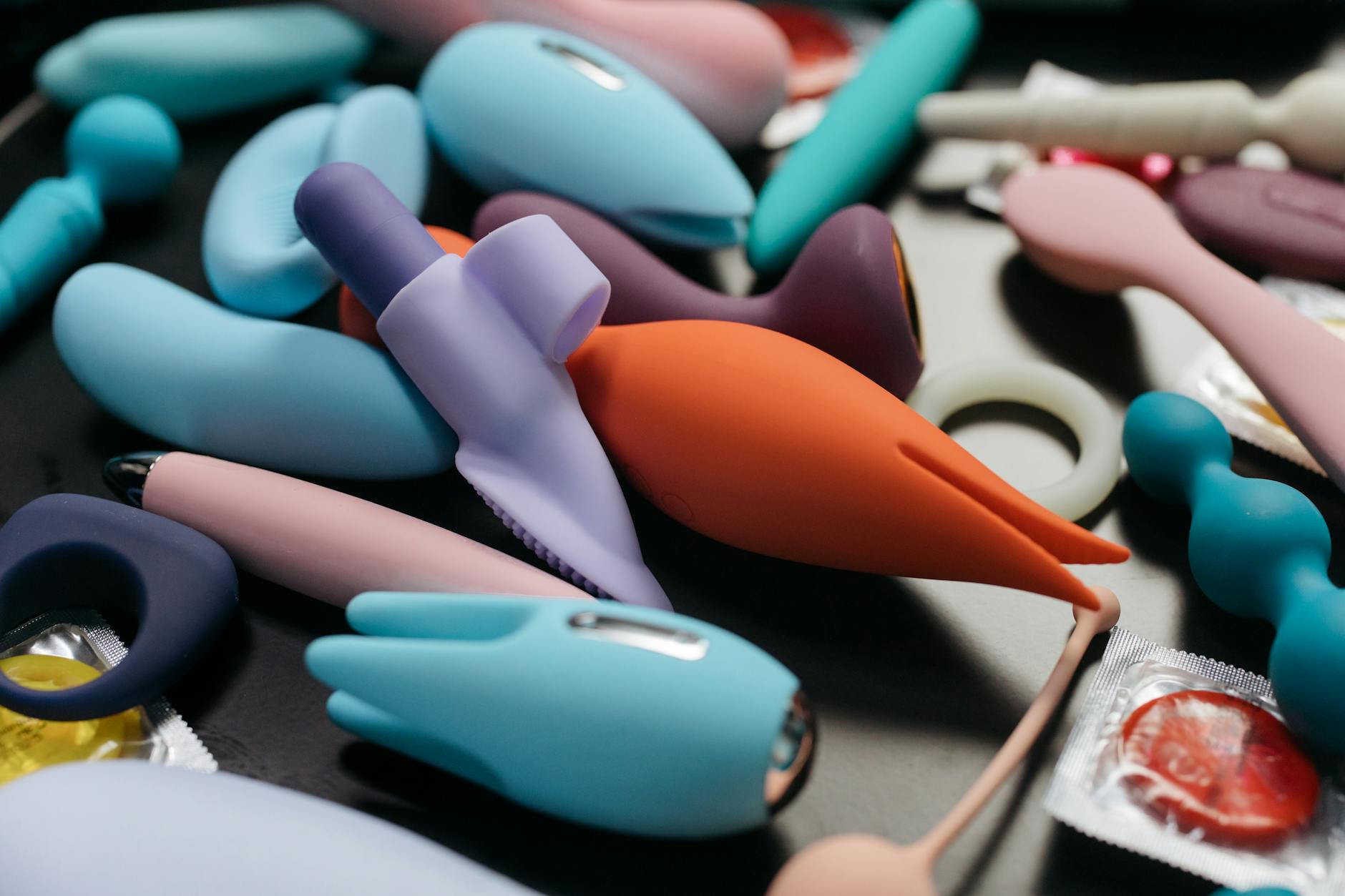
Photo by Anna Shvets on Pexels
The conversation to have before you buy anything
Don't lead with the toy. Lead with the feeling.
Start here: "I've noticed I'm having trouble feeling sensation lately. I think part of it is that I'm in my head. I'd like to work on that together."
Notice what you didn't do. You didn't make it about them. You made it about you, and you made it collaborative.
Then, give them a week or two. Let that sink in. Then: "I've been reading about clitoral vibrators, and I think trying one might help me relax and feel more. Would you be open to that?"
If they say no, don't push. But ask why. "What worries you about that?" Listen. Don't defend. Just listen. Most men will say something like, "I don't know, it just feels weird," or "I'm worried you'll prefer it to me." Name it. "You're worried I'll like it more than sex with you. That makes sense. That's not how it works, but I get why it feels that way."
Then offer a compromise: "What if we start with you watching? Or you controlling it? Let's make it something we do together, not something I do alone."
How to actually introduce a lemon vibrator to your partner
First time, keep it small. Don't whip out a toy mid-sex and expect your partner to feel excited about it. That's the fastest way to confirm their worst fear: that you're replacing them.
Instead, try this.
Build it into foreplay. You're lying there together. You say: "I want to try something. I'll use this on myself, and you can watch. You can touch me elsewhere. You're part of this." Start with light touch. Let them watch you use a lem vibrator on yourself. Some partners find that incredibly hot. Others need to warm up to it. Both are fine.
Let them have control. After a few times, hand them the toy. "Can you do this for me?" Suddenly they're not spectators. They're involved. Their hand is on your body. They're learning what makes you respond. Most partners find that far sexier than the alternative.
Talk during. "Right there. Yes. That feels incredible." Your partner needs to hear that they're still part of the experience. Because they are.
What a lemon clitoral vibrator actually does
You're not replacing sensation. You're redirecting it.
The clitoris has 8,000 nerve endings in a space the size of a pea. Most people with vulvas take longer to reach orgasm than people with penises. Air-suction clitoral vibrators like Hellolem's lemon toy work by stimulating those nerves without the direct friction that can feel overwhelming or numb over time.
When your partner watches you use one, they're not watching a replacement. They're watching you actually feel pleasure. Which, for most partners, is the hottest thing in the room.
Many couples find that once they get over the initial discomfort, using a lemon sucker together becomes one of their favorite parts of sex. It's not less intimate. It's differently intimate. You're present. You're responsive. You're showing them exactly what works for your body.
Addressing the comparison trap
Some partners will say: "I can do that. I don't need a toy."
Maybe they can. But can they do it for 20 minutes while you stay aroused and connected? Can they do it at exactly the right pressure and pattern every single time? Can they do it while also inside you, or touching you elsewhere, or engaging with you emotionally?
Probably not. Neither can most people, honestly.
A lem vibrator isn't better than your partner. It's different. It's consistent. It frees your partner to touch you in other ways, be present with you, look at you, talk to you. All the things that actually make sex feel less like mechanics and more like connection.
The longer conversation about pleasure
Here's the thing partners often don't realize: wanting a toy isn't about them being bad in bed. It's about you wanting to prioritize your own pleasure. Which is a sign of self-respect, not criticism.
I often recommend couples have a bigger conversation about pleasure expectations. Not during sex. Over coffee. "What do you think good sex looks like for us? What do you need? What do I need? How do we make sure both of us feel good?"
Toys, including lemon vibrators and lemon sexual toys generally, often emerge from that conversation as just one tool. Not the main event. Just a tool that helps you both feel more.
Many partners, once they get past the initial defensiveness, realize their own pleasure is actually better when you're relaxed and satisfied. It's not a zero-sum game. Your orgasm doesn't cost them anything. It costs them nothing. It actually adds to the experience for everyone involved.
When your partner remains resistant
Sometimes people need time. Sometimes they need reassurance. And sometimes they need a therapist.
If your partner's resistance to toys is part of a larger pattern of dismissing your needs, that's worth examining. Not as a relationship killer. But as data. Partners who won't engage with your pleasure, who make your needs about their insecurity, who refuse to hear you. Those are things to address with someone qualified, not alone.
But most partners aren't resistant forever. Most just need to understand that a lemon clitoral vibrator is an expansion of intimacy, not a threat to it. Once they see that, once they feel what it's like to have you actually present and responsive during sex, most come around.
FAQ
Why would my partner feel threatened by me using a vibrator?
Most partners grew up with a narrative that they should "be enough" for you sexually. That narrative is wrong, but it's powerful. Introducing a toy can feel like you're saying they're failing. They're not. You're just trying to feel more. Separating that conversation helps.
How do I talk to my partner about wanting to use a lemon sucker without hurting their feelings?
Lead with your need, not their inadequacy. "I want to feel more sensation. A toy helps me do that. I want to try it with you, together." Avoid phrases like "you never make me come" or "I need something more." Focus on what you want, not what they're missing.
Can my partner use a lemon vibrator on me during sex?
Absolutely. In fact, most couples find that having a partner control the toy feels far less threatening and far more intimate than using it solo. You're both involved. Your partner learns what patterns make you respond. It becomes part of your shared pleasure.
What if my partner says they don't like watching me use a vibrator?
Ask why. Is it discomfort? Is it concern? Is it overstimulation? Different partners have different boundaries. Start smaller. Maybe you use it during foreplay with your eyes closed. Maybe you use it alone first, and they join later. Consent and comfort go both directions.
Does using a vibrator mean I'll become dependent on it for orgasms?
No. Research on clitoral vibrators shows no desensitization effect if you vary patterns and take breaks. Many people use them sometimes and not others. Your body adapts. You don't become "addicted" to sensation.
How do I know if my partner's skepticism is just initial discomfort or a larger relationship issue?
Time and receptiveness tell you. Are they willing to talk about it? Are they curious, even if uncomfortable? Are they trying to understand your perspective? Those are green lights, even if they're nervous. If they're dismissive, angry, or refuse to discuss it at all, that's a bigger conversation you need to have, possibly with a therapist.
Moving forward together
Introducing toys into a relationship is really about introducing permission. Permission for you to feel good. Permission for your partner to help you feel good in new ways. Permission for both of you to care about pleasure as part of intimacy, not as something separate from it.
A lemon vibrator isn't the point. The point is that you deserve to come, you deserve to feel, and your partner deserves to be part of that experience instead of threatened by it. Once you both understand that, the toy is just a tool. Not a threat. Not a replacement. Just a way to get closer.
If you're navigating this conversation and hitting walls, reach out. We're here to help.