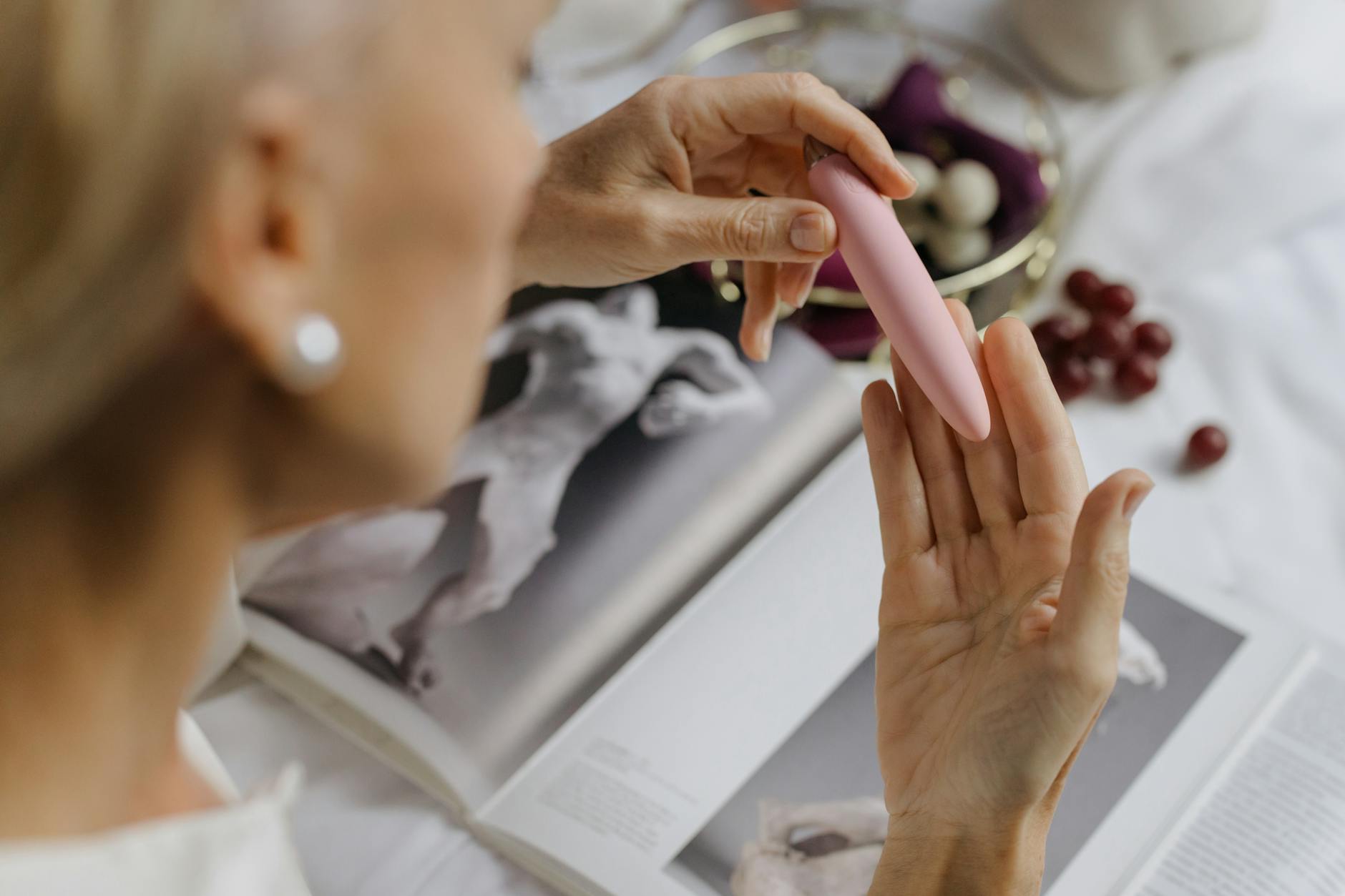
Let's be real about what changes after 40
Arousal doesn't disappear after 40. It just gets slower. And that's not a flaw in your design. It's not something to "fix." But it is something worth understanding, because the difference between feeling frustrated and feeling great often comes down to knowing what you're actually dealing with.
Here's the thing nobody tells you until you're living it: the warm-up time you had at 25? Gone. The automatic lubrication? Less reliable. The ability to get from zero to orgasm in five minutes flat? Unlikely. But faster isn't always better. Slower arousal often means deeper sensation, more control, and honestly, better orgasms if you work with your body instead of against it.
Why arousal actually takes longer now
Three physiological shifts are happening simultaneously. First, blood flow to the genitals slows down. Arousal is literally about blood vessels filling with blood and tissue swelling. When that process takes longer, the whole cascade takes longer. Second, your nervous system has less dopamine floating around (the chemical that drives that urgent, gotta-have-it feeling). Third, if you're perimenopausal or menopausal, estrogen is dropping, which means the tissues themselves are thinner and less vascular. It's not that you can't get aroused. It's that the on-ramp is longer.
This is actually backed up by research. Studies show that people over 40 take about twice as long to reach full arousal compared to their 25-year-old selves. The number most sex researchers cite is around 15 to 20 minutes versus 5 to 10. That's not a failure state. That's just biology.
Why lemon vibrators work so well for slower arousal
Clitoral vibrators like The Lem bypass the waiting game. Instead of relying on your body's own blood flow and nerve responsiveness to gradually build sensation, a vibrator is stimulating those nerves directly and continuously. You're not waiting for arousal to happen. You're activating it.
Here's the specific advantage: air-suction lemon vibrators create a rhythmic pulse that mimics the sensation of suction without the intensity of direct vibration. For bodies that need a longer warm-up, that matters. Intense vibration can feel overwhelming or even numb you out if you're not already deeply aroused. But suction? It feels like gradually increasing pressure and pleasure, which matches how your body actually wants to be approached right now.
The Lem vibrator works by creating micro-pulses that feel like gentle waves building in intensity. You start at pattern one, which feels almost like a suggestion. By the time you reach pattern three or four, you're fully activated. That progression is actually aligned with how arousal works for you now. You're not fighting your body's slower timeline. You're working with it.
The warm-up routine that actually works
Throw out the old playbook. Here's what works for bodies that respond slowly.
Start 20 to 25 minutes before you want to feel good. That's not a penalty. That's reality. During those first 10 minutes, focus on anything that gets your brain engaged: kissing, conversation with your partner, reading something that interests you sexually, or just acknowledging that you want this and giving yourself permission to take time. Your brain is half the pleasure equation, and it takes longer to shift gears after 40.
Around minute 10, move into direct contact. Use your hands, use your partner's hands, use lubrication (water-based, always). Don't reach for the vibrator yet. Spend five to ten minutes on this. You're building baseline arousal, waking up the nerve endings, letting blood flow gradually increase.
When you feel that shift—the moment when it stops feeling like something you're doing and starts feeling like something your body wants—that's when you reach for The Lem. Start on pattern one. This is not the time to jump to high intensity. Stay here for two to three minutes, letting your body adjust to the sensation. Then move to pattern two. Then three. You're stacking sensation on top of sensation, which feels way better than jumping straight to maximum intensity.
What changes when you actually honor the slower timeline
Here's what I see with my clients: when they stop treating slower arousal as a problem and start treating it as information, everything shifts. The frustration disappears. The pleasure deepens. And honestly, the orgasms are often more intense than they used to be.
That extra 10 to 15 minutes? It gives your nervous system time to fully engage. It gives your body time to produce enough natural lubrication to work with any external lubrication you're using. It gives your brain time to actually be present instead of distracted. When you use a lemon clitoral vibrator within this timeline, you're not forcing your body to perform. You're inviting it to do what it wants to do anyway, just a little faster and with more precision.
One more thing: longer warm-up often means longer staying power. If it takes 20 minutes to build to arousal, it also often means you can stay in that state for 30, 40, or 50 minutes without dropping off. That's not a bug. That's extended pleasure. Some of my clients say their best sessions now last longer and feel more satisfying than anything they experienced in their thirties.
The lubrication conversation
Slower arousal often means less automatic lubrication. Water-based lube is your friend here. Add it early, not as a last resort. Add it before you feel like you need it. The nervous system is weird: it actually responds better to sensation when there's already lubrication present. It's the difference between a hand brushing dry skin and a hand gliding smoothly over skin. One barely registers. The other creates pleasure.
Pair that with lemon sexual toys and you're looking at a completely different experience. The suction mechanism works better with a bit of moisture. The sensation is more consistent. And psychologically, adding lube early signals to your brain that this is intentional and pleasurable, not something you're trying to hack into working.
When to see a doctor
If arousal has completely stopped and lube and tools aren't helping, or if you're experiencing pain, that's worth mentioning to your GP. Sometimes slower arousal is just aging. Sometimes it's a sign that something else is going on: medication side effects, hormonal changes, or relationship dynamics that need attention. A good clinician can help you sort through which is which.
But most of the time, slower arousal at 40-plus is just your body operating on a different schedule. The fix isn't to force speed. It's to work with the timeline you've got.
FAQ: Your questions about slowing down and speeding up
Is it normal for arousal to take 20 minutes now when it used to take 5?
Completely normal. Blood flow slows with age, hormone levels shift, and your nervous system's dopamine production decreases. Research consistently shows that people in midlife take roughly twice as long to reach full arousal compared to younger versions of themselves. This isn't a dysfunction. It's an expected biological shift.
Will using a vibrator too much make it harder to get aroused without one?
No. Vibrators don't "ruin" your nerve endings. What sometimes happens is that if you rely only on intense vibration without building baseline arousal first, you might train yourself to expect that specific stimulus. But if you're using a lemon vibrator as part of a varied routine (hands, partners, different patterns), you're actually training your nervous system to be more responsive, not less.
Should I use a lemon clitoral vibrator if arousal is already difficult?
Yes, but strategically. The issue isn't the vibrator. It's how you're using it. If you jump straight to maximum intensity without warm-up, you might feel numb or overwhelmed. If you start on lower patterns and build slowly, you're working with your slower arousal timeline instead of fighting it. The vibrator then becomes a tool that helps you build sensation efficiently, not a substitute for actual arousal.
Does this mean I'll never have quick orgasms again?
Not necessarily. Some people find that with the right lemon vibrator and the right partner or situation, they can reach orgasm faster than their baseline warm-up time suggests. But even if quick orgasms do become rare, that's often a trade-off for deeper sensation and longer-lasting pleasure. Different doesn't mean worse.
What pattern should I use on The Lem if arousal is slow?
Start low. Patterns one and two. Spend at least two to three minutes on pattern one before moving up. This gives your nerve endings time to wake up and your arousal to build. Then progress to pattern three. Many people find that they don't need to go higher than pattern three or four. The longer build actually creates more satisfying sensation than jumping straight to the highest intensity.
Can my partner help speed things up?
Yes, but not by pushing harder or going faster. They can help by being present, by creating the conditions that let your brain relax (less performance pressure, more intimacy), and by being willing to spend extra time on warm-up. If you're partnered, communication about the timeline change is key. "I need about 20 minutes of warm-up now" is not a complaint. It's useful information that helps both of you have a better experience.
The bottom line
Slower arousal after 40 isn't a problem to solve. It's a signal to pay attention to. Your body is telling you that it needs more time, more attention, more intentionality. Tools like lemon vibrators work brilliantly within that framework because they help you move through the warm-up phase efficiently without forcing anything. You're meeting your body where it is, working with your timeline, and often ending up with more pleasure than you had before. That's not settling. That's actually understanding yourself better than you did at 25.