Let's name what actually happened
Years apart changes the body's memory of pleasure. Not because you've forgotten how to orgasm, but because your nervous system has essentially reset. When physical intimacy stops for months or years, your body genuinely recalibrates what feels safe, what feels possible, what triggers arousal. Add a relationship gap (or a long separation within a relationship) and you've also got emotional recalibration happening simultaneously.
Here's what makes this different from starting over with a new partner: you have history, which means you have both comfort and complexity. Your body might want connection but your nervous system is cautious. That's not broken. That's exactly what a nervous system does when it hasn't felt safe in that way for a long time.
Why the restart never feels like the original connection
When we stop having sex, our pelvic tissue goes through real physical changes. Estrogen production decreases locally, tissues become thinner, blood flow patterns shift. Your clitoral sensitivity doesn't disappear, but how quickly it responds does change. Many people report that after years without sex, sensation feels muted at first, or sometimes unexpectedly sharp. Both are normal.
The nervous system piece is equally real. Your brain hasn't been conditioned to expect arousal during physical touch. That neural pathway has been dormant. It doesn't disappear, but reactivating it takes intentionality. You can't just pick up where you left off because your body has literally been somewhere else.
When I work with couples rebuilding after a long gap, they often describe the first attempts as feeling "mechanical" or "like learning again." That's your system being honest. You're not failing. You're recalibrating.
Why lemon vibrators specifically help with this restart
Three reasons a lemon clitoral vibrator matters here more than, say, penetration or hand stimulation alone:
1. Sensation consistency. Your nervous system needs predictability as it relearns what feels good. A lemon vibrator like the Lem delivers the same sensation every time. No variation, no anxiety about "am I doing this right?" Your body can focus on receiving rather than managing uncertainty.
2. Control stays with you. When you're rebuilding trust in your own pleasure, you need autonomy. You hold the device. You choose the pattern. You choose when to stop. That agency is not a small thing when your system has been in hibernation. Many partners find that when the receiving partner has direct control, the psychological safety is higher, and that safety makes arousal actually possible.
3. Suction stimulation doesn't require the same tissue readiness. The air-pulse technology of lemon vibrators (and the Lem specifically) stimulates nerves without requiring the same level of engorgement that penetration or direct friction does. Your clitoris is ready for this kind of stimulation long before your nervous system is ready for partnered sex. That means you can rebuild pleasure on your own timeline, which paradoxically makes partnered intimacy more possible sooner.

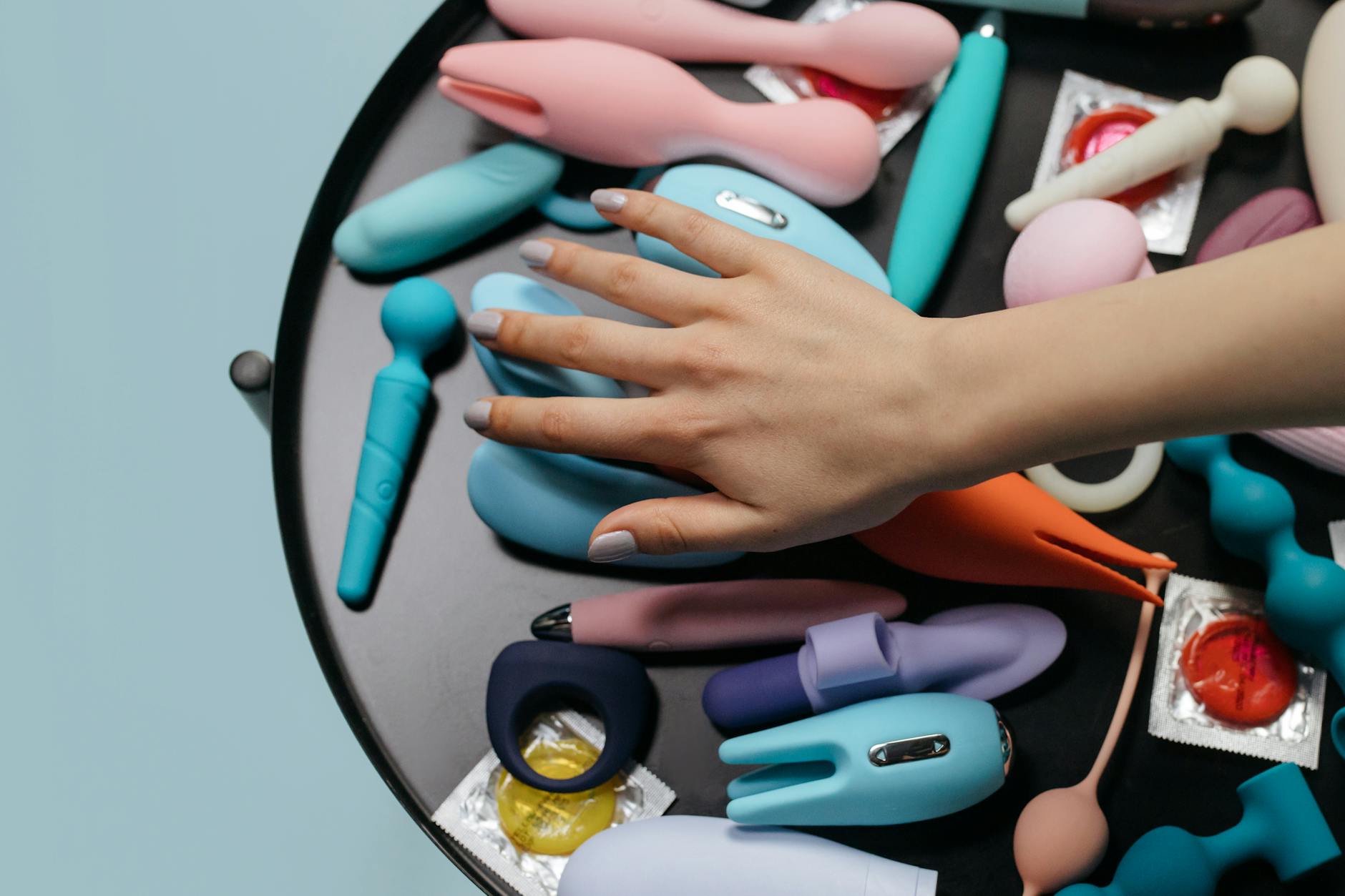
Photo by cottonbro studio on Pexels
The three-phase restart: what actually works
I've worked with enough couples rebuilding after separation or long gaps to see a pattern that works. It's not about pushing intensity or timeline. It's about staged nervous system readiness.
Phase One: Solo rediscovery (2-4 weeks minimum). Start alone. Not because partnered play is wrong, but because your nervous system needs to remember arousal in a low-stakes environment first. Use the lemon vibrator on its lowest setting. Spend 15-20 minutes exploring what feels good without the goal of orgasm. Your job is sensation mapping, not achievement. Many people find that after years away, sensation is weirdly surprising. Your body might feel more or less sensitive than you remember. That's data, not failure.
Phase Two: Partnered observation (2-4 weeks). Your partner is present, but not directly involved. You use the lemon vibrator while they're nearby. This serves two purposes. One: your nervous system starts associating their presence with pleasure again, which is crucial. Two: your partner gets to see what you like now, in this body, at this time. This is not voyeurism. This is intimate education. Many couples find this phase dissolves a surprising amount of anxiety because it removes the guessing game.
Phase Three: Partnered integration (ongoing). Now the vibrator becomes part of partnered play. They can hold it. You can guide their hand. You can explore together. But here's the key: the vibrator stays. It's not a "training wheels" phase to eventually discard. The lemon clitoral vibrator becomes part of your sexual vocabulary permanently, not a crutch to abandon. This is important psychologically. You're not "fixing" yourself back to some original state. You're building something new that actually works for your current nervous system.
Managing the emotional complexity alongside the physical
Here's what I see most couples miss: they treat the physical restart and the emotional rebuild as one thing. They're not. You can have your body starting to respond to a lemon vibrator while your heart is still confused about whether you're safe in this relationship or with this person. You can have genuine arousal and genuine ambivalence at the same time. Both are real.
If you're rebuilding with a partner after years apart, the lemon vibrator actually gives you something valuable: it removes the pressure of being "enough" for each other physically. The device carries some of that responsibility. That sounds clinical, but it's surprisingly liberating. You both get to focus on presence and connection rather than performance.
Having that clear boundary (the vibrator does the intense clitoral stimulation, presence does the emotional work) actually strengthens intimacy. Your partner isn't trying to be something they can't be, and you're not disappointed when their hand can't replicate the precision of air-pulse technology. Everyone wins.
Practical setup for the actual restart
Four things that make the physical experience actually work:
Water-based lubricant every time. After years without activity, your natural lubrication will take time to rebuild. Don't interpret dryness as lack of interest. Use a water-based lube generously. Silicone lube feels richer, but if you're using a silicone lemon vibrator, stick with water-based to avoid degradation.
Start on the lowest setting. Lemon vibrators typically have 5-10 intensity levels. Don't be ambitious. Your clitoris is sensitive right now in ways that might be surprising. Start at level 1-2 and stay there for multiple sessions before exploring higher intensities.
Build your warm-up time. Don't expect instant arousal. Spend 10-15 minutes on non-genital touch first. Massage, kissing, whatever felt good before the gap. Your nervous system needs the ramp-up time more now than ever.
Use the pause, don't push through. If something feels uncomfortable or triggering, pause. Sit with it for 30 seconds. Breathe. Then decide whether to continue or stop. Your body is sending you information. Respecting that information is how you rebuild trust in your own nervous system.
When to get additional support
If pain appears during use, don't power through. Genitourinary changes are real after years without activity, and they're also treatable. A gynecologist trained in sexual health can assess whether you need topical estrogen or other interventions.
If you're rebuilding with a partner and one of you is experiencing dissociation or significant anxiety during intimacy, bring that to a therapist before continuing. A lemon vibrator can't resolve trauma or serious relationship rupture. It can support healing that's already underway, but it's not a replacement for professional guidance.
The same goes if you're rebuilding solo after the gap. If arousal feels completely absent after 4-6 weeks of consistent exploration, that's worth discussing with a healthcare provider. Sometimes medication changes, hormonal shifts, or depression can genuinely suppress arousal. That's also fixable, but it needs proper diagnosis.
The thing nobody tells you about restarting
Your second or third sexual chapter with a partner (or with yourself) is often more satisfying than the first. You know yourself better. You have less to prove. You understand what you actually like rather than what you think you're supposed to like. The restart feels slow, but it's building something more solid.
A lemon vibrator isn't a magic fix. It's a tool that respects where your nervous system actually is right now, not where you wish it was. Use it with patience, with curiosity, and without a timeline. Your body will tell you when it's ready for the next phase.
People also ask
How long does it usually take for sensation to come back after years without sex?
Sensation never really leaves, but responsiveness changes. Most people notice initial shift within 2-4 weeks of consistent solo exploration. Full nervous system recalibration typically takes 2-3 months. Your clitoris doesn't need that long; your brain and nervous system do. That's the piece most people underestimate.
Can I use a lemon vibrator if I'm nervous about rebuilding intimacy?
Actually yes, especially because you're nervous. A lemon clitoral vibrator gives you complete control, which reduces anxiety significantly. You're not dependent on a partner's touch or timing. That autonomy often makes the process feel safer and more manageable. Start solo so there's zero external pressure.
Is it normal for sensation to feel different than it did years ago?
Completely normal. Your tissues have changed, your nervous system has reset, and your body is literally a few years older. Sensation might feel more muted initially, or sometimes more intense in unexpected ways. Both are typical. This is why phase one is solo exploration, not performance.
Should my partner be involved in the lemon vibrator exploration, or should I start completely alone?
Start alone. Your nervous system needs to relearn arousal without the variable of another person's expectations. Once you've rebuilt that solo connection (2-4 weeks minimum), bringing your partner in as an observer creates a bridge. They see what works, you feel safe, and the foundation is solid before you move to partnered play.
What if the lemon vibrator doesn't feel good at first?
That's actually common in the restart phase. Your sensitivity might be higher than you expect, or your nervous system might find the sensation unfamiliar after years away. Try a lower intensity, use more lubricant, or take breaks between sessions. Your body isn't rejecting the vibrator; it's recalibrating. Give it 3-4 sessions before deciding it's not for you.
How do I know if I need to see a doctor before restarting?
If you're experiencing pain, significant dryness that doesn't improve with lubricant, or if arousal feels completely absent after solo exploration, check with a gynecologist. Also worth discussing if you're on medications that affect sexual function. Most issues from a long gap are manageable, but they need proper assessment first.