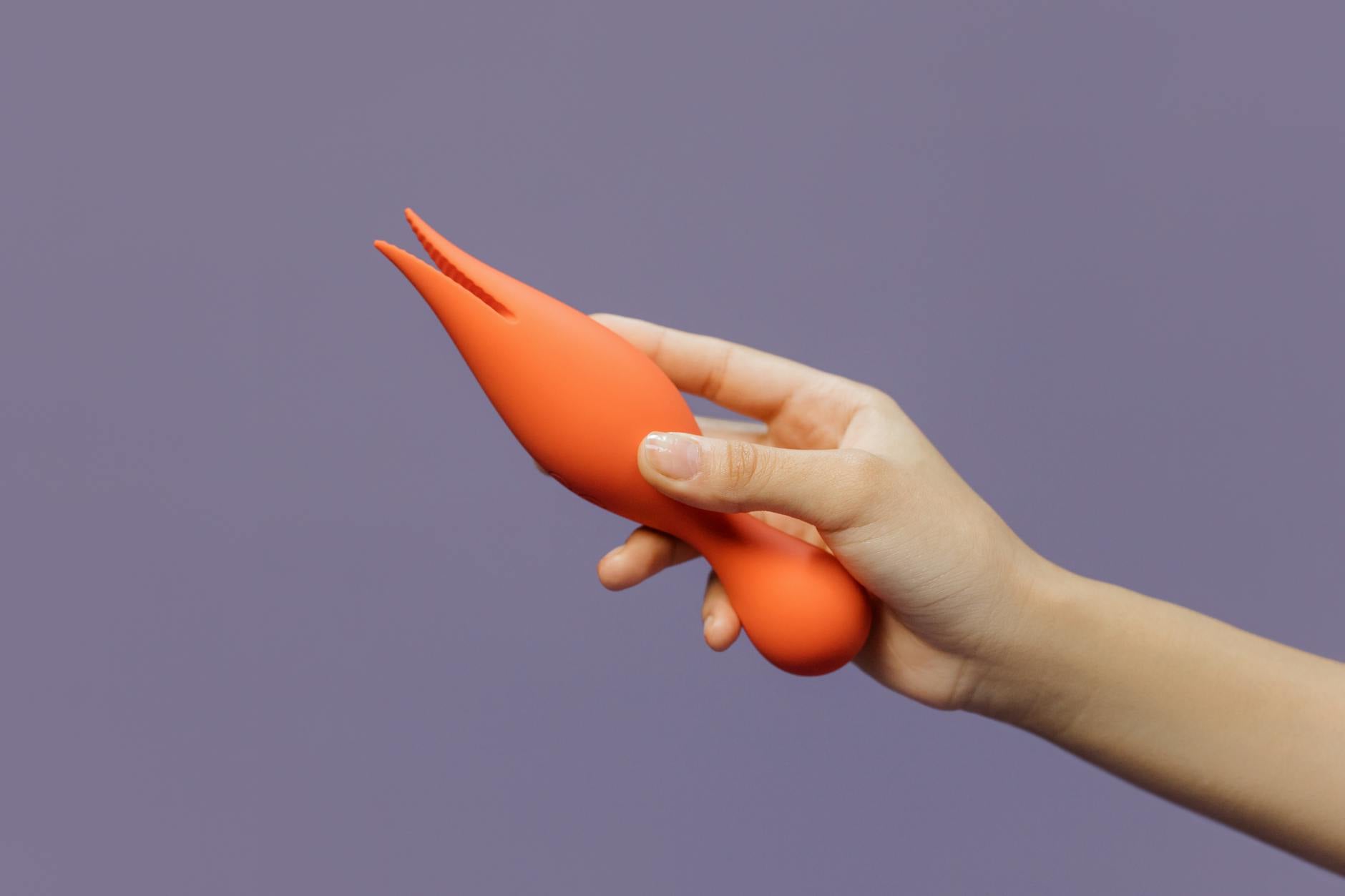
Pleasure doesn't disappear after ten years. It just changes shape.
I've sat with hundreds of couples who've been together for a decade or more, and here's what I hear most: "We love each other, but sex feels like a habit now, not a connection." Not broken. Not joyless. But flatter. More mechanical. Less present.
That's not a failure of the relationship. That's what happens when two nervous systems have been synchronized for years without conscious reconnection. The novelty dims. Anticipation flattens. Touch becomes routine instead of surprising. And somewhere along the way, both partners stop believing their bodies can feel what they used to feel together.
The good news: sensation isn't lost. It's just dormant. And tools like lemon vibrators can wake it back up in ways that solo play or partnership alone often can't.
Why pleasure shifts after years of partnership
Three things are happening simultaneously, and they're all normal.
First: habituation. Your nervous system has learned the other person's touch. That's efficient for survival, but terrible for pleasure. When touch becomes predictable, your brain stops paying attention to it. The same caress that felt electric in year two now barely registers in year ten. This is biology, not boredom.
Second: emotional distance creeps in. Long-term relationships accumulate small resentments, unspoken frustrations, competing needs. You might be having sex, but you're not fully present during it. Part of you is thinking about the dishwasher or the thing they said last week. Pleasure requires presence, and presence requires clearing the emotional air first.
Third: bodies change. Age, stress, medication, hormonal shifts, recovery from pregnancy. The same positions that worked at thirty might strain your back at forty. What felt good might feel less precise now. If you haven't talked about that explicitly, you're both trying to follow a script that no longer fits.
None of this means your relationship is ending. It means your relationship is entering a phase where pleasure requires intentional design instead of accident.
How clitoral vibrators interrupt the habituation cycle
Here's what I tell couples: a vibrator isn't a band-aid for disconnection. But it is a circuit-breaker for habituation.
When you introduce a lemon vibrator into shared intimacy, several things happen at once.
First, the sensation is novel. It's not your partner's hand or mouth. It's a completely different texture, rhythm, and intensity. Your nervous system wakes up. You have to pay attention because the stimulus is unfamiliar. That focused attention is the beginning of presence.
Second, it shifts the power dynamic in useful ways. If your partner is holding the vibrator, they're now actively orchestrating your pleasure in real time. They're watching your responses, adjusting speed, noticing what makes you gasp. That's different from the learned routine. It reintroduces play.
Third, if you're using it yourself while they're with you, they get to witness your pleasure in a new way. They see what actually works for you. Most couples have never had this conversation explicitly. You might be faking or minimizing your responses to manage your partner's feelings. A vibrator removes that filter.
Lemon vibrators specifically work well here because they're designed for precision clitoral stimulation. The suction pattern of a lemon vibrator mimics the kind of stimulation that feels different from manual touch. It's intense without being harsh. Focused without being rigid.
The conversation you need to have first
Don't just buy a vibrator and ambush your partner with it during sex. I know that sounds obvious, but I've worked with enough couples to know it happens.
Instead, have this conversation outside the bedroom. When you're both clothed, calm, and not aroused.
Say something like: "I've noticed our sex life feels a bit on autopilot, and I miss feeling connected to you in that way. I want us to explore something that might help us both feel more present. I'm thinking about trying a vibrator together. Are you open to that?"
If they say no, don't push. But do ask why. Are they worried it means you're not satisfied with them? That they're being replaced? Are they embarrassed? Do they think it's cheating? These are the actual conversations that matter.
Most partners' hesitation isn't about the toy. It's about what they think the toy means. Your job is to clarify: this isn't about them being inadequate. It's about both of you wanting to feel more alive together.
If they're open to it, talk about what you want to try. Do you want them to use it on you? Do you want to use it on yourself while they're inside you? Do you want to try it solo first to figure out what you like, then bring that knowledge into partnered time? There's no right answer. The point is you're deciding together.
How to actually use a lemon vibrator together
Start with a longer foreplay window than usual. Seriously. Budget an hour if you can, knowing that twenty to thirty minutes might be just foreplay.
Begin without the vibrator. Kiss, touch, build arousal the old way. Let your nervous systems start to synchronize again. This isn't a race.
When you're both aroused, introduce the lemon vibrator. If your partner is using it, start on the lowest setting and move slowly. The goal isn't speed. It's presence. Watch your partner's face. Notice what makes them respond. Ask them what feels good. Listen.
If you're using it on yourself while they're with you, let them see. Don't hide it. Let them watch your body respond. This is vulnerable, and that vulnerability is where reconnection happens.
Don't expect an instant orgasm. Sometimes the first time is awkward or takes longer. That's fine. You're resetting years of habituation. Your body might need a few sessions to trust that this new sensation is safe and pleasurable.
If you want to combine a lemon vibrator with penetration, communicate. Some positions work better than others depending on the toy size and your bodies. Start slowly. Check in. Adjust.
What happens after the first time
You might feel closer. You might feel embarrassed. You might feel nothing special, and that's okay too.
The magic isn't in the toy itself. It's in the conversation, the intentionality, the willingness to try something unfamiliar together. You're essentially saying: "I still want to feel you. I still want to explore this part of our relationship."
That message matters more than the orgasm.
If it goes well, you might find that introducing novelty once helps. Or you might want to experiment more. Some couples use vibrators occasionally to reset when they feel themselves slipping back into autopilot. Others incorporate it more regularly.
There's no normal. There's just what works for you both.
If it doesn't go well, that's information too. Maybe the toy wasn't the barrier. Maybe the barrier was emotional distance that needs addressing in therapy or honest conversation. Maybe you're both too tired or stressed right now. Maybe your partner needs more time to get comfortable with the idea.
All of that is navigable. But you can't navigate it if you're not talking about it.
When to use a lemon vibrator solo first
Some people benefit from exploring alone before bringing a toy into partnership.
If you've never used a vibrator, or if you're nervous about being watched while exploring, give yourself permission to experiment solo first. Learn what patterns you like. Learn how your body responds to different intensities. Build confidence in your own pleasure.
Then, once you understand what works for you, you can bring that knowledge into shared time. You might say: "I tried something alone that felt really good. Would you want to try it together?" That's a completely different conversation than "I want us to use this toy and I'm not sure what I like yet."
Both approaches are valid. Solo exploration can actually deepen partnership because you show up with more self-knowledge and less performance anxiety.
The bigger picture
After years together, pleasure shifting isn't a problem to solve. It's an invitation to redesign your intimate life intentionally.
You've built trust, vulnerability, and history. You've learned each other's bodies in ways you couldn't have in year two. You know what doesn't work. Now you get to actively choose what does.
Lemon vibrators are one tool in that redesign. How to use lemon vibrators for stronger orgasms without desensitization explores how clitoral stimulation can feel even more intense than it used to. How to use clitoral vibrators across different positions gives you the physical toolkit for reimagining your shared experience.
But the real tool is the conversation. The willingness to say: this matters to me, and I want to explore it with you.
That's what reconnects long-term partners. Not the toy. The choice to keep choosing each other, even when pleasure requires more intention than it once did.
People also ask
Will using a vibrator with my partner make me dependent on it?
No. Your body won't become "addicted" to vibration. What happens is that your nervous system becomes familiar with a new sensation, just like it did with your partner's touch years ago. If you stop using the vibrator, you'll return to baseline sensitivity. That said, if you've been experiencing numbness from routine, reintroducing novelty can feel so much better that you want to keep exploring. That's desire, not dependency.
What if my partner feels threatened by a vibrator?
This comes up often, and it's worth naming directly. Many people internalize the belief that a toy means they're inadequate. The truth is simpler: a vibrator does one specific thing very efficiently. It doesn't replace intimacy, presence, or emotional connection. If your partner is struggling with this, you might reframe it: "I want to feel more alive with you. This is one way we can both experience that together." Sometimes it helps to involve them in choosing the toy, or to use it only when they initiate. Give them agency in how this change happens.
How do I know which lemon vibrator is right for us?
Start with something mid-range in terms of intensity and size. A tool like the Lem vibrator offers precise clitoral stimulation without being overwhelming. If you've never used a vibrator before, something smaller and more discrete might feel less intimidating. If you know you like stronger sensation, go for it. You can always adjust. Read reviews from people describing what intensity feels like, not just aesthetics.
What if we try it and it doesn't work?
Try at least twice before deciding. The first time is often awkward or takes longer. Your body might need time to acclimate to the new sensation. If it genuinely doesn't feel good after a second or third attempt, that's real information. You can put the toy away and revisit the bigger question: what would help us both feel more present together? Sometimes the answer isn't a vibrator. Sometimes it's therapy, more date time, or deeper emotional work.
Can we use a lemon vibrator if we have different desires?
Yes, and this is actually when vibrators become most valuable. If one partner wants more frequent sex and the other doesn't, a vibrator can help both of you feel satisfied without resentment. If one person wants longer foreplay and the other wants to move faster, a vibrator can provide more stimulation in less time. It's a tool for negotiating different rhythms and desires, not erasing them.
How often should we use a vibrator?
There's no prescription. Some couples use one every time they have sex. Others use it occasionally when they want to reset. Some use it weekly, some monthly. The question isn't how often is normal. It's what feels good to both of you. If one person wants to use it more often than the other, that's a conversation to have. "I feel most connected to you when we use this. Can we do it more often?" is very different from "I don't enjoy sex without it." One is about deepening connection. The other might signal something worth exploring in therapy.