How to Use Lemon Vibrators When You Want Pleasure Without a Partner Watching
Let's be real. You're in a committed relationship, you're happy with your person, and you still want solo time with your lemon vibrator. No audience. No performance. No explanation. That's not a sign your relationship is broken. It's a sign you're human.
Here's what I've learned after decades of working with couples: the partners with the strongest sense of their own pleasure actually have better partnered sex. Because they know what they like. Because they're not performing. Because their body isn't a blank slate waiting for someone else to write on it.
But a lot of people feel guilty about this. Like wanting privacy means wanting someone else. It doesn't.
The gap between partnered and solo pleasure
When someone's watching (even someone you trust completely), your nervous system behaves differently. You're managing their experience, tracking their reaction, calibrating based on what you think they want to see. That's not relaxation. That's work.
Solo pleasure with your clitoral vibrator is the opposite. You can take twenty minutes to warm up. You can stop, restart, explore, build slowly, get distracted, come back. You can have an orgasm that feels completely different from the ones you have with your partner and learn something from it. You can figure out what your body wants when it's not managing anyone else's needs.
This isn't about your partner being the problem. It's about the fundamental neurological difference between performing and exploring. Both matter. Neither replaces the other.
Why partnered people still need solo time with their vibrator
Three reasons that have nothing to do with your relationship being wrong.
Rhythm mismatch is normal. Your desire might peak on a Tuesday morning. Your partner's might peak on Saturday night. Your arousal curve might need thirty minutes of buildup. Theirs might need five. A lemon vibrator gives you a way to meet your body's timeline without negotiating anyone else's.
Pleasure types are different. Some people love the feeling of building orgasm with a partner present. Some people need complete silence and no one's body nearby to access their deepest arousal. Neither is a referendum on the relationship. It's just anatomy and neurology.
Ownership of your pleasure is fundamental. I work with couples in their 20s, 40s, and 60s. The consistent pattern I see is that people who can reliably give themselves pleasure are the ones who can ask for what they want. They know what feels good. They're not relying on a partner to unlock their body. They're collaborating from a place of knowledge, not negotiation.
Setting up the conversation with your partner
If you haven't talked about this yet, the conversation might feel vulnerable. That's normal. Here's how I usually recommend framing it.
Separate it from the partnership. This is not "I need something from you that you're not giving me." This is "I want to explore my own body on my own timeline, the same way you might want solo time for a hobby or a workout." One is about the relationship. The other is about personal autonomy.
Be specific about what you need. Not "I need privacy" but "I need an hour on Saturday mornings when I can have the bedroom to myself. That's all." Clarity removes the space for anxiety. Vagueness leaves room for your partner to imagine all kinds of things.
Normalize it. Your partner might not use a vibrator. Plenty of people don't. But most people have some form of self-care that requires privacy. Journaling. Working out. A therapy session. Scrolling alone. Frame it the same way.
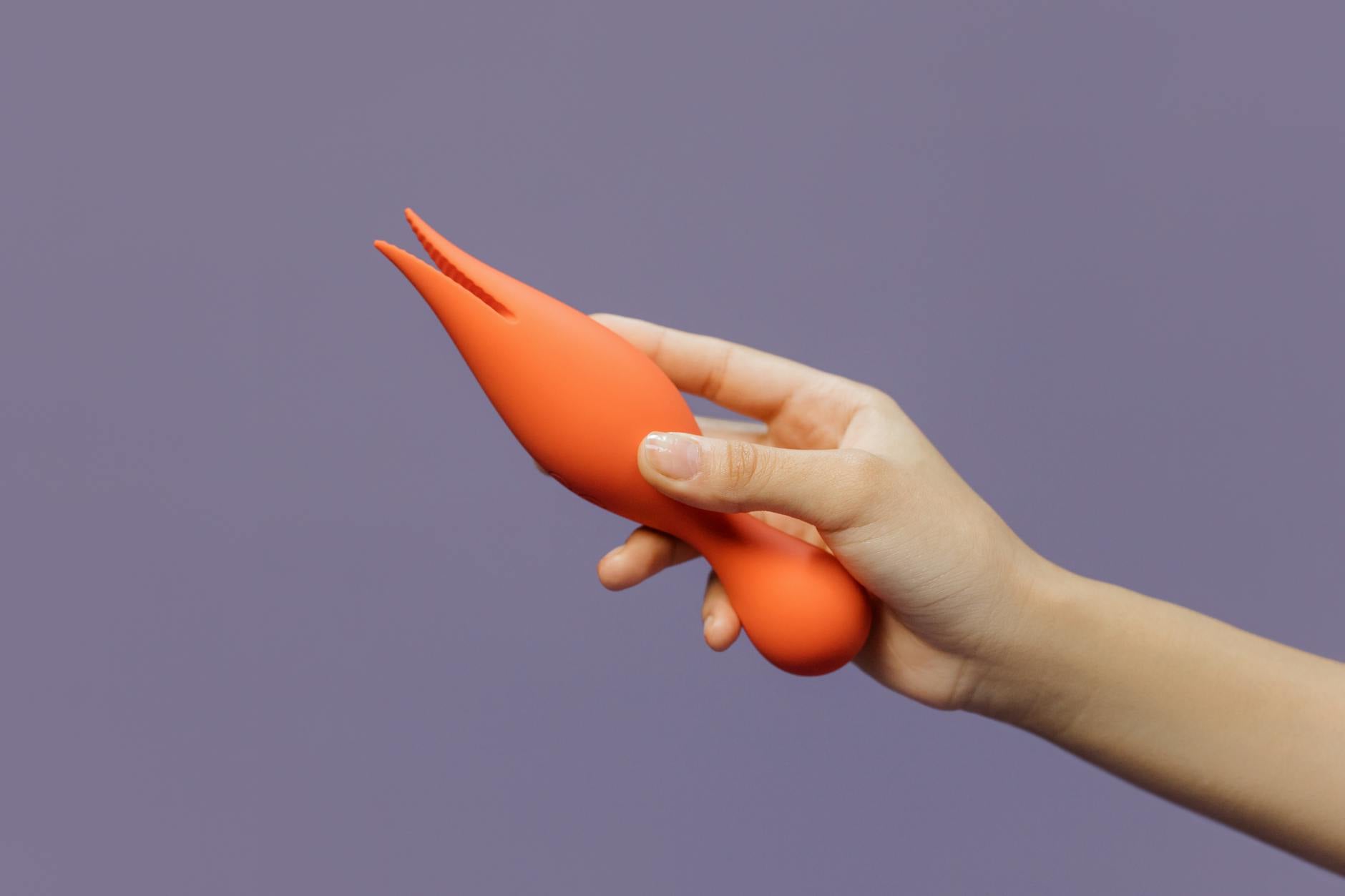
Photo by cottonbro studio on Pexels
When your partner isn't comfortable with it
Sometimes you'll have this conversation and your partner will feel threatened. That's actually pretty common, especially if pleasure has always been something you've shared or if there are trust issues underneath.
When that happens, the conversation isn't really about the vibrator. It's about what it symbolizes to them. Are they worried you're fantasizing about someone else? Worried they're not enough? Worried you're going to want something different sexually because of it?
Those are real concerns that deserve real answers. Not dismissal. Not "you're being irrational." A genuine conversation about what they're actually afraid of.
Honestly, sometimes this requires a couples therapist. I know that sounds formal. It's not. It's just someone trained to help you both speak and listen in a way that creates actual understanding instead of a repetitive argument.
But here's what I want you to know: if you want solo pleasure time and your partner says you can't have it, ever, that's not a healthy boundary. That's control. And that's worth examining.
How to actually use your lemon vibrator solo when you're partnered
Once you have the conversation and some agreement about privacy, the logistics are simpler.
Lock the door. Not because you're doing something wrong, but because interruptions kill arousal faster than anything else. A locked door signals to everyone that this is your time.
Warm up longer than you think you need. Without a partner's energy in the room, your nervous system can take more time to switch from "managing the world" to "receiving pleasure." Budget twenty to thirty minutes, even if you think you only need five. Your body will thank you.
Start with the lem vibrator at lower settings. You might be surprised how much sensation you get from pattern one or two when there's no one watching and no pressure to perform. Go slowly. You can always turn it up.
Let your mind do what it does. If thoughts show up (what to make for dinner, that email you need to send, literally anything), that's fine. You're not trying to achieve pure meditation. You're just trying to feel good. Fantasies might show up. Your partner's face might show up. Nothing might show up and you'll just feel your body. All of that is normal.
There's no finish line. Solo sex doesn't require an orgasm. Sometimes the goal is just feeling your body in pleasure for twenty minutes. Sometimes you're exploring sensation. Sometimes you're actually trying to get off. All three are valid uses of your vibrator time.
Building a sustainable rhythm
The couples I work with who make this part of their life (not just a one-time event) usually pick a rhythm and protect it. Sometimes it's Sunday mornings. Sometimes it's Tuesday and Friday evenings. Sometimes it's "whenever you need it, just text that you're taking that hour."
The point is it becomes expected, not negotiated each time. You're not asking permission before each solo session. You've already said "this is part of my life" and your partner has agreed to that.
For some people this also becomes a way of managing stress, processing emotions, or handling a mismatch in desire. When your lem vibrator time is regular and non-threatening, it becomes a tool for your own wellbeing, not a flashpoint in the relationship.
What this actually does for your partnership
I know the counterintuitive part is hard to believe, but here's what I see: couples who both have solo pleasure time often have better sex together. Because you're not desperate. Because you're not performing. Because you know what your body wants and you can ask for it.
Your partner also gets the benefit of knowing you're capable of meeting your own needs. That's attractive. That's stable. That's actually sexy, even though it might not feel like it on the surface.
You're also modeling something important: that pleasure is normal, that your body matters, that taking care of your own needs isn't selfish.
FAQ
How often should I be using a lemon vibrator solo if I'm in a relationship?
There's no "should." Some people want this weekly. Some want it monthly. Some want it whenever the mood strikes. The key is that it feels good to you and your partner understands and agrees. The frequency that works is the frequency you both consent to. If you need it more often than your partner wants to give you privacy, that's actually worth talking about, because it might signal a larger need you have that's not being met.
What if my partner wants to join in but I really want to be alone?
You get to say no. Full stop. "I appreciate that, and I really want this time solo" is a complete sentence. You don't need to justify it. That said, if your partner is consistently wanting to participate and you're consistently wanting to opt out, that's a difference in desires worth addressing with honesty or a therapist.
Is using a clitoral vibrator alone considered cheating?
No. Absolutely not. This is actually a really common anxiety, especially if you were raised with a lot of shame around sexuality. Using a vibrator is not infidelity. It's self-care. It's exploring your own body. It's learning what feels good. If your partner considers it cheating, that's a belief worth examining together, because it's usually rooted in something deeper than the vibrator itself.
How do I bring this up if we've never talked about toys before?
Start small. "I've been thinking about exploring my own pleasure more, and I'd like to have some solo time with a vibrator." You don't need to make a presentation. You're just saying what you want. Their reaction will tell you a lot. If they get defensive, that's information. If they're supportive, great. Either way, you know where you stand.
Can I use my lemon vibrator together and also solo?
Yes. Completely. A vibrator can be a partnered tool and a solo tool. That's the beauty of it. Some sessions you use it together. Some sessions you use it alone. Both are real, both matter.
What if my partner is the one who wants solo vibrator time and I'm the one feeling insecure?
Read this article again, but sit with your own feelings first. What are you actually afraid of? Is it that they don't want you? Is it that they might want something different? Is it about trust? Once you know what the actual fear is, you can have a real conversation about it instead of a fight about the vibrator.
The bottom line
You're allowed to want pleasure on your own timeline. Your partner is allowed to want privacy too. Wanting solo pleasure doesn't mean something is wrong with your relationship. It means you're human, your body has needs, and you're responsible for knowing and meeting them.
If you want to explore this with your partner, start with the conversation. Be clear. Be kind. Listen to what they actually say, not what you're afraid they might think. And remember: your pleasure, whether solo or partnered, matters. Always.
Need help navigating these conversations? Get in touch with us and we can talk through what's on your mind.