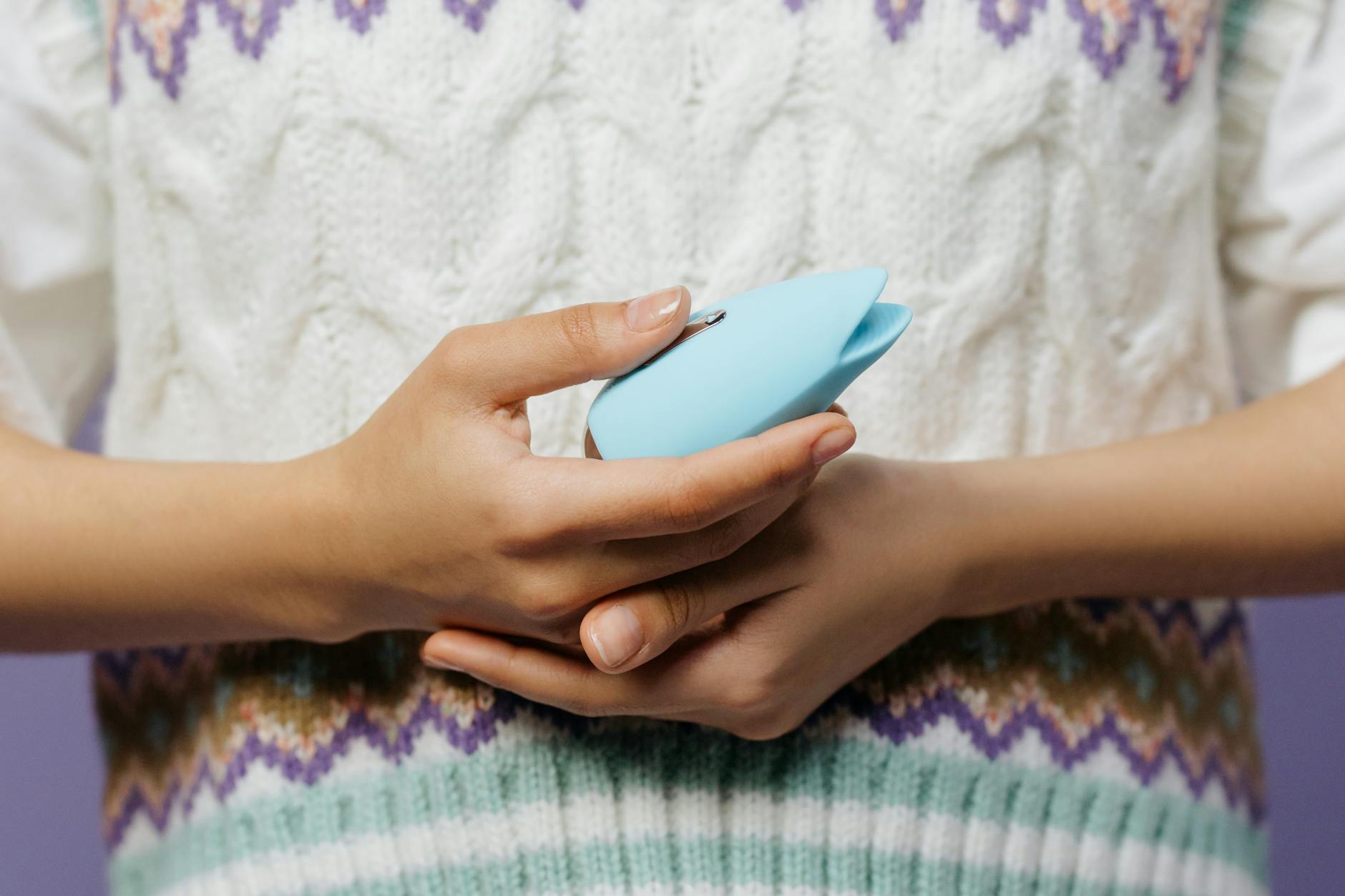
Let's name the thing that's actually happening
Performance anxiety isn't about being bad at sex. It's about your brain running a parallel commentary while your body is trying to do something that requires your brain to shut up. Your nervous system is split between sensation and surveillance. You're checking in on yourself constantly. Am I taking too long? Do I look weird right now? Is my partner bored? Did I just make that noise?
That constant self-monitoring creates a feedback loop. Your arousal drops because you're not present. Your arousal drops, so you panic. That panic makes you less present. The cycle tightens.
Performance anxiety doesn't mean you're broken. It means you're human and you've probably internalized some mixture of cultural messages, partner feedback, past experiences, or your own perfectionism. The good news is that clitoral vibrators like lemon sexual toys work partly because they interrupt this cycle entirely.
Why performance anxiety kills arousal in the first place
Arousal requires what neuroscientists call "cognitive demand." Your brain needs to be focused on sensation, not on evaluation. The moment you flip into self-monitoring mode, you activate your sympathetic nervous system. That's your fight-or-flight response. Your body literally cannot be aroused and defensive at the same time.
When you feel pressure to orgasm, your pelvic floor tightens. When it tightens, orgasm becomes harder. When orgasm gets harder, the pressure increases. You're now fighting against your own body.
Performance anxiety also triggers what's called "spectatoring." That's a term from sex therapy where you're watching yourself have sex instead of experiencing it. You're the audience and the performer simultaneously. It's exhausting. It's also arousal-killing because pleasure requires presence.
How lemon clitoral vibrators bypass the anxiety loop
Here's the thing about air-suction clitoral vibrators like the Lem. They work with a sensation that's different enough from typical touch that it can cut through anxiety. The suction pattern doesn't feel like pressure to perform. It doesn't feel like a test you might fail. It feels like something is happening to you, not something you have to achieve.
That distinction matters. When you're receiving stimulation that feels automatic and consistent, your brain has less room for the commentary. You can't really monitor whether you're doing it right because you're not the one doing it. The device is doing the work.
This is especially true if you've spent years in patterns where you were responsible for your own arousal or your partner's satisfaction. A lemon vibrator is neutral. It has no expectations. It won't get tired or frustrated or bored.
The practical setup that actually helps
If you're dealing with performance anxiety, the way you set up your solo time or partner time matters.
Solo setup: Remove the audience in your head. That means no performance metrics. Don't decide in advance how long you'll go or whether you need to orgasm today. Start with the intention of feeling good, not achieving something. Use the Lem on pattern 1 or 2 (lower intensity) and give yourself permission to change patterns, stop, take a break, or do something completely different. You're training your brain that sex is exploration, not a task with a pass-fail grade.
With a partner: Tell them explicitly what you need. "I'm working on being more present, so I need you to lead for a bit while I focus on feeling." A good partner will understand that this isn't rejection. It's you protecting the space you need to reconnect. If they use a lemon clitoral vibrator on you, that's even better because it removes the pressure on you to provide feedback or pace yourself. You're the receiver. Your job is to notice what feels good.
Environmental setup matters too. Performance anxiety thrives in distraction and discomfort. Use the bedroom or space where you feel safe. Make sure you won't be interrupted. Temperature matters. Light matters. Some people with performance anxiety need low light (less feeling watched by themselves). Some people need their partner to look away for a bit. Honor what you need.
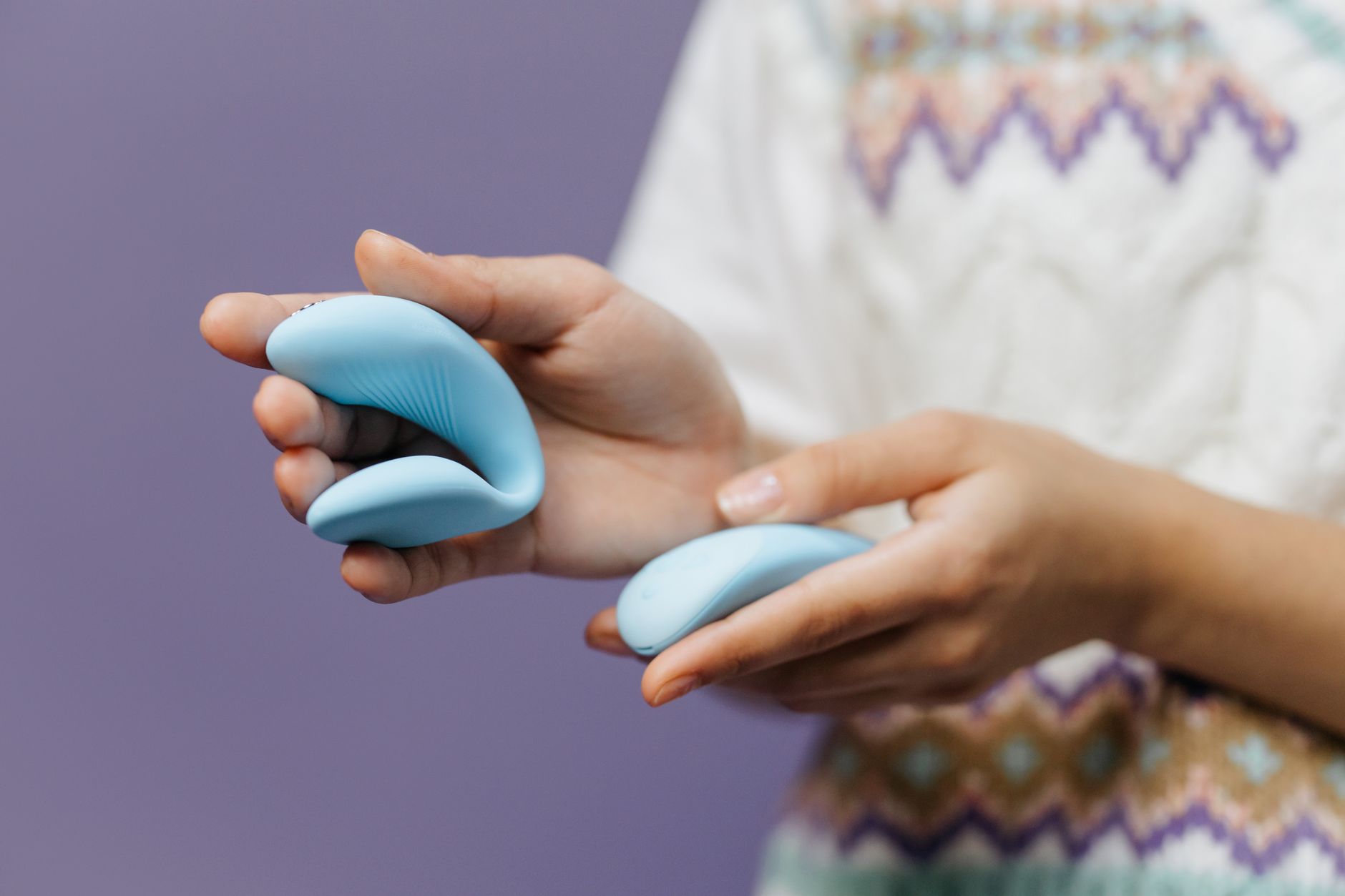
Photo by cottonbro studio on Pexels
The breathing and nervous system reset
Performance anxiety lives in your nervous system. You can't think your way out of it. You have to calm your physiology.
Before you even touch yourself or use a lemon vibrator, spend two minutes on box breathing. Inhale for four counts, hold for four, exhale for four, hold for four. Do this five or six times. You're telling your nervous system that you're safe. No threat. No performance review upcoming.
When you start using a clitoral vibrator, notice when your breath gets shallow. Shallow breathing is a sign that the commentary is running again. You're checking in on yourself. When you notice it, pause. Take three deep breaths. Then resume. You're literally retraining your nervous system to stay calm during arousal.
This matters because performance anxiety often lives as a tension pattern in your body. Your shoulders pull up. Your jaw tightens. Your pelvic floor clenches. Lemon vibrators work best when your body is relaxed. The paradox is that you can't relax by trying harder. You relax by noticing tension and then allowing it to soften.
What to do when the anxiety still shows up mid-session
You're using the vibrator. It feels good. Then suddenly you're aware that you're using it. You're thinking about how you look. Whether your partner is enjoying watching. Whether you're taking too long.
Don't panic. This is normal. Don't fight the anxiety. Instead, name it. "There's that thought again." Notice it like you're watching a cloud pass. Then redirect your attention back to the vibration. Feel the contact. Feel the rhythm. The anxiety doesn't disappear, but you're not fusing with it anymore. You're not treating it as information about reality. It's just a thought.
If you're with a partner and anxiety spikes, you can also ask them to keep using the vibrator while you take a breath break. That external regulation helps. You're not responsible for maintaining your own arousal while you're also trying to calm down. Someone else is holding that container for you.
When it's deeper than just performance pressure
Sometimes performance anxiety is about shame. Sexual shame is different from performance anxiety. It's a deeper belief that something about your sexuality is wrong or unacceptable. If every time you try to feel pleasure, you're hit with a wave of shame or guilt, that's worth naming and possibly working through with a therapist.
Performance anxiety sits on the surface. Shame sits deeper. A good therapist who specializes in sexuality can help you untangle whether this is performance anxiety or trauma or shame, and what the actual roots are. Lemon clitoral vibrators can help you reconnect with pleasure in the meantime, but they're not a substitute for that deeper work if it's needed.
The reframe that changes everything
Here's what I tell people in my practice. Pleasure is not a performance. It's not something you do for someone else. It's not something you achieve or fail at. It's a capacity you practice.
When you use a vibrator without the pressure of getting somewhere, you're practicing feeling. You're practicing presence. You're practicing the nervous system state that allows arousal to build naturally. That practice changes your baseline. Over time, you bring less anxiety into every sexual encounter because you've trained your body that pleasure is safe and achievable.
Start with one solo session where your only goal is to notice what feels good. Not to orgasm. Just to feel. Use a lemon vibrator on a low setting. Notice the sensation. If your brain starts narrating, bring it back to sensation. That's the whole practice. That's the reset.
People also ask
How long does it take for performance anxiety to get better with a vibrator?
Think in weeks, not days. Your nervous system doesn't retrain overnight. Most people notice a shift within 3-4 weeks of consistent solo practice with reduced pressure. But this isn't linear. You might have a great session and then a session where anxiety shows up again. That's normal. You're building a new pattern, and patterns need repetition to stick. The key is consistency, not perfection.
Can I use a lemon vibrator with a partner if I have performance anxiety?
Yes, and often it's helpful. The key is that you communicate what you need beforehand. "I want to practice being present, so I'd like to focus on feeling rather than performing." A partner using a lemon clitoral vibrator on you can actually reduce anxiety because you're receiving rather than producing. You're not responsible for pacing or feedback in the same way. Just make sure your partner understands that this is about your nervous system, not about them.
What if the vibrator itself makes my anxiety worse?
That's worth paying attention to. Sometimes a vibrator feels too intense or too exposing when you're anxious. Try starting with lower patterns. Or try solo first without a partner watching. Or try it in a position where you feel more in control. Some people with performance anxiety feel safer in a receiving position but need privacy first. Honor your needs. The goal isn't to push through discomfort. It's to find the right container for your nervous system to calm down.
Is performance anxiety the same thing as erectile dysfunction or anorgasmia?
Not quite. Performance anxiety is the cause. Erectile dysfunction and anorgasmia are sometimes the result. When you're stuck in a sympathetic nervous system state (fight or flight), your body can't respond the way it normally would. But the underlying issue is anxiety, not capability. That's actually good news because it means addressing the anxiety often resolves the physical symptom. You're not broken. Your system is just in protection mode.
Should I tell my partner about my performance anxiety?
Yes. Especially if you're planning to address it together. Vulnerability builds connection. And your partner can't support you well if they don't understand what's happening. You can keep it simple: "I notice I get in my head sometimes during sex. I'm working on that, and I might need to do things a bit differently for a while." Most partners appreciate the honesty and the chance to help.
Can antidepressants affect performance anxiety around sex?
Some antidepressants can reduce anxiety generally, which sometimes helps with sexual anxiety. But some also create numbness or difficulty with arousal, which can feel like performance anxiety is getting worse. If you're on medication and noticing sexual side effects, talk to your prescriber. There are often options to adjust dosage or timing that help. And lemon vibrators can sometimes work better on certain antidepressants because the suction sensation is strong enough to register even with numbness.
The long game
Performance anxiety is treatable. You're not stuck with it. Solo practice with a vibrator like the Lem is one of the fastest ways to retrain your nervous system because you're removing all the external pressure and coaching your brain to stay present. Pair that with communication if you have a partner, and you're rebuilding your relationship with pleasure on solid ground. That's worth the practice.