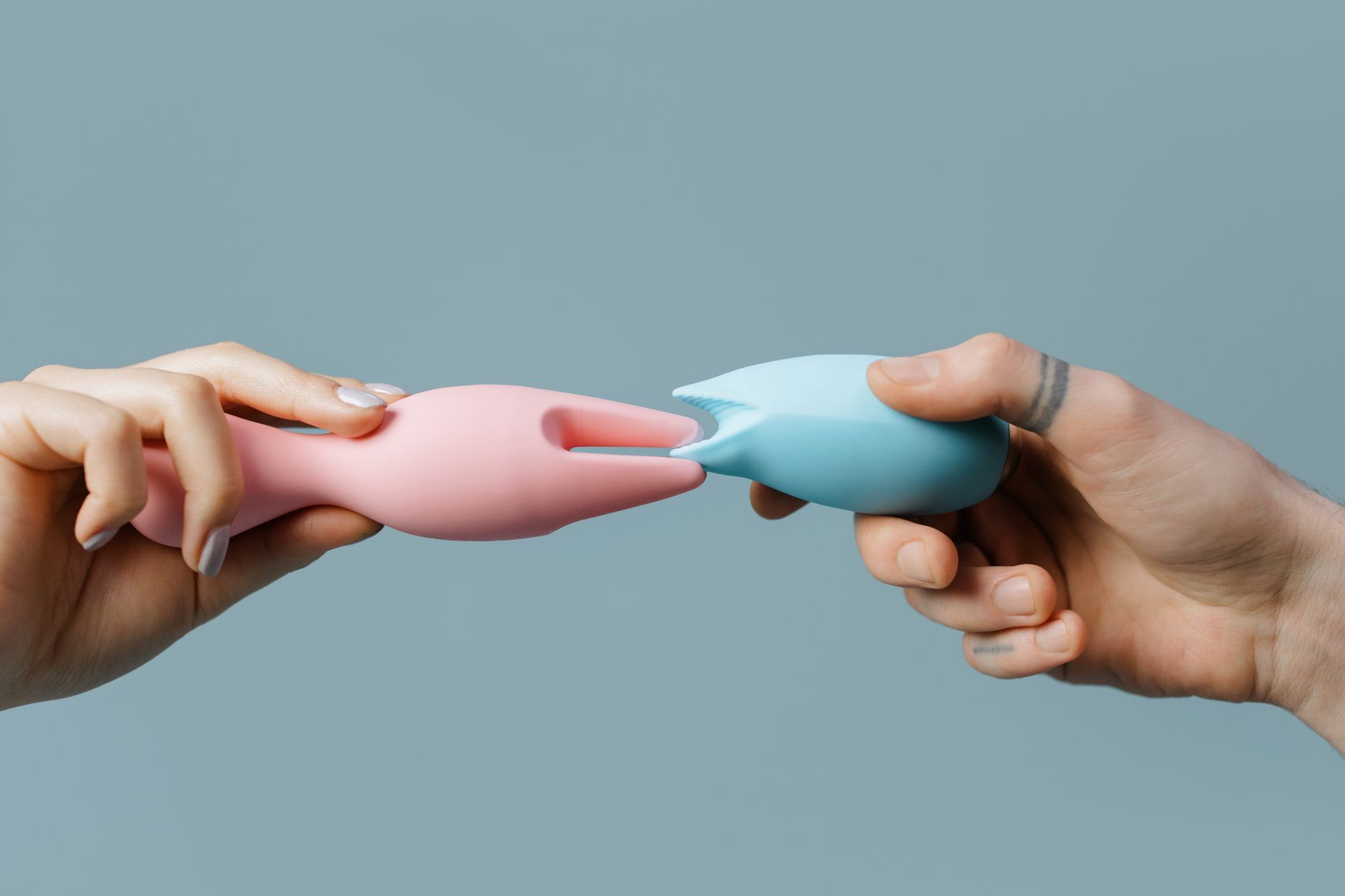
How to Use Lemon Vibrators When You Feel Pressure to Climax Quickly
Let's be real. Somewhere between Netflix culture and social media, climax became a finish line instead of a destination. You're lying there, aware of the time, aware that your partner is waiting, aware that orgasm is "supposed" to happen by now. And then nothing. Or worse, everything shuts down.
That pressure is the enemy. Not laziness, not your body, not the toy. The pressure itself.
Here's what I see in my practice over and over: people (especially women and non-binary folks) who can orgasm when they're alone and unchurried, but the second there's a clock ticking or an expectation hanging in the air, the whole system locks. The clitoris, which is essentially a nerve bundle responding to signal and release, tightens instead. Your brain floods with cortisol. Your body reads the situation as threat, not pleasure. You're fighting physics at that point.
A lemon vibrator (specifically the air-suction design that defines the Hellolem collection) works differently than traditional vibrators in this exact scenario. It doesn't require the same mental focus or the same clitoral responsiveness that old-school vibration does. And that small difference is everything when you're trying to rebuild trust in your own body's timing.
Why Pressure Kills Arousal Faster Than Anything Else
The science here is straightforward. When your body senses performance anxiety, your parasympathetic nervous system (the one that drives arousal) gets overridden by the sympathetic system (the one that drives fight-or-flight). Your pupils dilate for scanning threats, not pleasure. Blood vessels constrict rather than dilate. Your pelvic floor tightens instead of releasing.
Add a ticking clock and it gets worse. You move straight from foreplay into "we need results" mode. The warm-up phase shortens. Arousal doesn't build gradually—it's expected to be instant. Your clitoris never gets the slow stimulation that lets sensation actually compound.
Most people don't realize that orgasm isn't the goal of pleasure. Release is the byproduct of sustained, unrushed attention. You can't manufacture it by going faster or harder or longer. You make space for it by removing the stakes.
The Lemon Vibrator Advantage When You're Stuck in Speedrun Mode
A clitoral vibrator like the Lem works through gentle suction and pulsing patterns rather than direct vibration. That matters here because suction requires less clitoral engagement from you. Your attention can stay diffuse. You're not hyper-focusing on sensation or waiting for the big moment. The device does the work while you just... exist.
Specifically, three things help when pressure is your real problem.
One: The pressure metaphor actually works. Suction mimics oral sex, which most bodies find easier to surrender to than direct vibration. There's less urgency built into the sensation itself. The patterns are rhythmic but not frantic. You can breathe into it instead of bracing for it.
Two: You can use it without penetration or partner involvement. Solo exploration with a lemon clitoral vibrator strips away all audience effect. Nobody's watching the clock. Nobody's waiting. You can take forty-five minutes and call it a win. That's where confidence rebuilds.
Three: Lower settings actually work. With traditional vibrators, lower settings sometimes feel ineffectual. With a lemon vibrator, even pattern 1 or 2 creates satisfying sensation. You can start so gently that arousal builds instead of jolts. Slow arousal is sustainable arousal.
The Reset Protocol: How to Unlearn Pressure
If you've spent months or years feeling rushed, your nervous system needs evidence that slowness is safe. Here's what I recommend to clients:
Week One: Solo only, no partner communication yet. Use your lemon vibrator alone, with zero intention toward climax. That might sound counterintuitive, but the goal is to prove to your body that touching yourself doesn't have to lead anywhere. Set a timer for twenty minutes. Explore patterns. Notice temperature, texture, what feels warm versus sharp. At minute fifteen, you might orgasm. You might not. Both are equally valid data.
Week Two: Extend the same patience to partner touch, but without penetration yet. Let them know you're working on sensation and timing, and that you need to keep things nongoal-oriented. A lemon vibrator can come into play here with explicit permission: "I want to use this, and I want you to know that using it doesn't mean I'm trying to hurry. It means I'm focusing on what actually feels good right now."
Week Three and beyond: Reintroduce partnered activity very gradually. Many people find that once they've rebuilt solo confidence, the pressure with a partner diminishes naturally. You've already proven (to yourself) that your body works. The stakes are lower because you know what success feels like.
Setting Realistic Expectations (And Why Orgasm Isn't the Only Metric)
Here's what usually surprises people: once you remove the pressure to climax, you often climax faster. It's backwards, but it's real. Your nervous system relaxes. Your clitoris doesn't tighten in defense. Sensation can actually accumulate.
But let's be clear: even if you don't orgasm, you win. A forty-five-minute session with a lemon vibrator where you feel present, aroused, and relaxed is radically better than a five-minute session where you're performing arousal and hating every second.
Orgasm is one kind of release. Pleasure is the bigger thing. If you're chasing climax, you'll always feel behind. If you're chasing sensation, you might be surprised by the climax that shows up as a side effect.
When to Check In With Your Partner About Timing
If your pressure comes from a partner's impatience or explicit comments about "taking too long," that's a different conversation than internal performance anxiety. And it matters.
A partner who genuinely cares about your pleasure won't mind if it takes an hour. They won't sigh or check their phone. They won't communicate (through body language or words) that they're waiting. If that's happening, that's relational friction disguised as sexual friction, and no vibrator fixes that.
You might need to have a harder conversation: "When I feel rushed, I can't relax, and when I can't relax, sex becomes a source of shame instead of joy. I need us to reframe this." That boundary is as important as the toy.
Using Lemon Vibrators to Build Stamina (The Right Way)
Once the pressure subsides, some people want to extend pleasure intentionally. That's different. You're not chasing time because you have to. You're playing with duration because it feels good.
With a lemon clitoral vibrator, you can build arousal gradually, plateau it, back off, build again. This kind of edging trains your nervous system in a way that traditional vibration doesn't. The suction patterns allow for longer sessions without numbness or overstimulation.
Start at a lower pattern for ten minutes. Move to a medium pattern for five. Back to low for another five. See how long you can sustain that kind of wave before your body decides it's ready to release. Most people find they naturally extend from twenty minutes to forty or more once they stop fighting the clock.
That's pleasure building itself. Not pressure. Just permission.
FAQ: Pressure and Pleasure
Why do I orgasm alone but not with my partner?
Your alone time doesn't have an audience. There's no expectation, no judgment, no one waiting. With a partner, your brain is processing their presence, their timing, their potential disappointment. That divided attention is usually enough to block arousal. The fix is proving to both of you that slower, patience-based exploration works better than racing. A lemon vibrator helps because it reframes the activity from "trying to climax" to "exploring sensation together."
Can a lemon vibrator actually help me climax faster if I want to?
Paradoxically, yes. Once you've rebuilt nervous-system trust through pressure-free sessions, your body actually becomes more responsive. You've trained it to relax into sensation rather than brace against it. Some people find their orgasm threshold drops by half once the anxiety leaves. But the speed is a side effect of the release, not the goal.
What if my partner thinks needing slower pace means something's wrong with me?
Nothing is wrong with you. Needing time to warm up is normal. Needing absence of pressure is normal. About forty percent of people with vulvas need more than ten minutes of sustained, focused stimulation to orgasm. That's not dysfunction. That's your system working as designed. The partner who rushes that is the problem, not your body.
Is there a way to use a lemon clitoral vibrator that helps if I'm really anxious?
Start with the device off. Just hold it. Feel the weight, the texture, the temperature. Use it as a focusing object for a few minutes before you even turn it on. Then start with the lowest pattern. Many people find that beginning with suction while relaxed (in a bath, for example) removes the performance aspect. The water, the warmth, the privacy. That's a less fraught entry point.
How long should I actually spend on this before I know if pressure was the real problem?
Give it at least three weeks of consistent solo exploration (two to three times per week) before you'll have real data. Your nervous system doesn't recalibrate in one session. But usually by week three, most people notice a shift: either a genuine orgasm, or at minimum, arousal that feels less like a performance and more like an experience.
What if I feel guilty taking time for slow pleasure?
That's worth examining. Pleasure guilt often comes from old messages about sex being for your partner, about female bodies being for service. Slow, patient, self-directed pleasure is radical in that context. It's also non-negotiable for actually enjoying sex. If guilt comes up, that might be worth exploring with a therapist. A lemon vibrator is a tool, but healing the shame underneath is the real work.
The Bigger Picture: Reclaiming Your Own Timeline
Your clitoris doesn't wear a watch. Your pleasure doesn't operate on anyone else's schedule. The moment you stop treating orgasm like a deadline and start treating it like a destination you might reach (or might not, and that's fine), everything changes.
A lemon vibrator won't fix relational pressure or deep performance anxiety. But it can be a tool for evidence. Evidence that your body works when it's safe. Evidence that slowness is better than speed. Evidence that pleasure is real when you stop performing it.
Start alone. Stay curious. Let the sensation lead. That's where trust rebuilds.