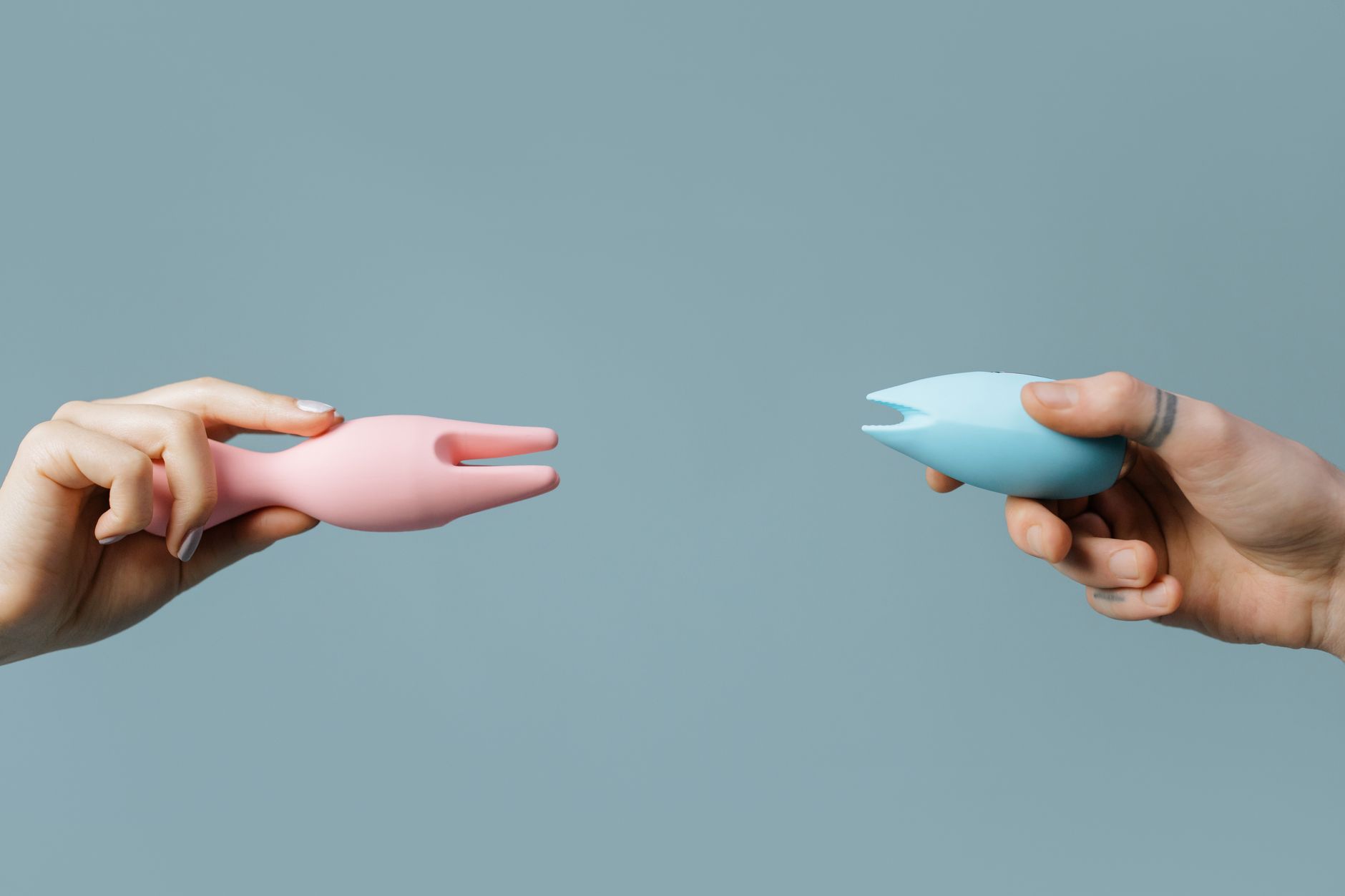
How to Use Lemon Vibrators When Vaginal Dryness Affects Pleasure After Childbirth
Let's be real. Nobody warns you that your vagina might feel like the Sahara after you have a baby.
They tell you about sleep deprivation, about your body not feeling like your body, about the overwhelming combination of joy and exhaustion. But the dryness that makes even basic physical sensation feel uncomfortable? That part gets whispered about in postnatal support groups, if it gets mentioned at all. Which is a shame, because it's one of the most common postpartum complications and one of the easiest to fix once you know what's actually happening.
Here's the mechanical truth: your estrogen crashes after delivery. This is especially pronounced if you're breastfeeding, which suppresses estrogen further. Lower estrogen means thinner vaginal tissue, reduced blood flow to the area, and less natural lubrication. It's not psychological. It's not a sign that you're not attracted to your partner. It's biology doing what biology does after one of the most physically demanding things your body can do.
The good news is that this is temporary, treatable, and something that clitoral vibrators like the Lemon can actually help you navigate more easily than you might think.
What postpartum vaginal dryness actually is
Postpartum dryness isn't just about lubrication. It's about tissue health. After birth, your vaginal tissue is thinner, more fragile, and less elastic. It heals slowly, and this process can take months. The combination of reduced moisture and sensitive tissue means that traditional penetrative sex or even certain types of stimulation can feel uncomfortable, raw, or even painful.
This matters because it often arrives alongside other postpartum realities: pelvic floor weakness from pregnancy and delivery, scar tissue if you tore or had an episiotomy, hormonal fluctuations that come with nursing or formula feeding, and the bone-deep fatigue of caring for a newborn. Any one of these would be tough. All of them together can make the idea of pleasure feel distant.
But here's what matters: clitoral pleasure is different from penetrative sensation. Your clitoris doesn't require the same tissue elasticity or lubrication that the vagina does. And clitoral vibrators, especially air-suction models like the Lemon, work beautifully for postpartum bodies because they stimulate nerves without friction.
Why clitoral vibrators work better than other options right now
During the postpartum period, your body doesn't need friction. It needs gentle, consistent stimulation that doesn't require the tissue to stretch or accommodate pressure. Traditional vibrators rely on direct contact and movement, which can feel intense or irritating on already-sensitive postpartum tissue. Air-suction vibrators work differently. They use gentle pulses of suction and release, which stimulates the clitoris without the mechanical friction that can feel uncomfortable.
This matters in two specific ways. First, the suction sensation is more diffuse than direct vibration. You're not pressing a vibrator directly against sensitive tissue. You're creating a gentle seal and pulse, which feels completely different and much more comfortable for most postpartum bodies. Second, suction stimulates the entire clitoral complex, not just the external part you can see, which often means pleasure builds more slowly and feels more accessible, even when everything else feels off.
The lubricant conversation
You'll need lube. Not because you're broken, but because your body is in a temporary state where natural lubrication is limited and tissue is more fragile. The right lubricant makes everything easier and safer. Water-based lubes work best with silicone toys like the Lemon. They're easy to rinse off, they don't degrade the toy material, and they work with your body instead of against it.
Apply lube generously. Not bashfully, not economically. Generously. You're not trying to feel sensual or sexy at this stage. You're trying to make touch comfortable, which is the actual foundation of pleasure returning. A good rule: if you think you've used enough, add a bit more.
If standard lubes irritate you, hyaluronic acid-based options are gentler on sensitive postpartum tissue. They feel more like your body's natural moisture and tend to be easier on already-tender skin.
Timing and pacing
Postpartum is not the time to push yourself toward anything. Your nervous system is flooded with prolactin and oxytocin if you're nursing, your body is still healing from delivery, and you're operating on fragmented sleep. Pleasure is not a priority, and that's completely fine.
When you do feel ready to explore, start small. Lie down. Make sure you have at least 20-30 minutes without interruption (I know, ask me how I know this is a fantasy with a newborn). Use lube generously. Start on the lowest setting if you're using a vibrator with multiple speeds. The goal isn't orgasm. The goal is reconnecting with sensation, which is much gentler work.
Many postpartum people find that stimulation feels better in the weeks after their pelvic floor starts to heal, which is typically 6-8 weeks postpartum for vaginal delivery and longer for cesarean births. If you had tearing or an episiotomy, give yourself more time. Your doctor can tell you when penetration is safe, but clitoral pleasure can often be explored earlier because it doesn't involve the affected tissues.
Communication with your partner (if you have one)
This is crucial. Your partner needs to know that postpartum dryness isn't about attraction or interest. It's a temporary physical state. You're not being withholding. You're not uninterested in them. You're in a season where your body is doing something very specific, and you need them to understand that without making it about them.
Many postpartum people find that solo exploration actually helps the couple conversation later. When you've reconnected with your own pleasure in a way that feels comfortable, you have baseline knowledge about what works now. You're not trying to jump back into partnered sex while everything feels wrong. You've already done the groundwork.
If your partner wants to be involved, focus on activities that don't require vaginal lubrication or sensation. Clitoral stimulation can absolutely be partnered. Penetration can wait, and that's fine. The pressure to jump back into "normal" sex is one of the most damaging things about postpartum recovery conversations. There's nothing normal about your body right now. Normal comes back, but not on a timeline anyone predicted.
When to see a doctor
If dryness is still severe six months postpartum, talk to your OB or GP. Prolonged dryness can sometimes indicate thyroid issues or other postpartum complications. If you're experiencing pain beyond general discomfort, if you have signs of infection, or if you're concerned about scar tissue, get it checked. There are topical estrogen treatments designed for postpartum use that are safe even while nursing.
Don't wait for this to resolve on its own if it's affecting your quality of life or your relationship. Postpartum dryness is fixable, and you don't have to just accept six months of discomfort.
The bigger picture
Postpartum dryness is temporary. For most people, it starts improving around the 12-week mark and continues to improve for the first year postpartum. For nursing parents, it can extend longer, sometimes into the second year, but it does resolve. Your tissue will regain elasticity. Your hormones will rebalance. Your natural lubrication will return.
In the meantime, clitoral vibrators like the Lemon offer a way to explore pleasure without pushing your body into something it's not ready for. They let you reconnect with sensation on your own timeline. They work with postpartum physiology, not against it. And they give you a way to prioritize yourself during a season that's almost entirely about prioritizing someone else.
Your pleasure matters. It matters now, even though everything feels hard. It matters even though you're exhausted. It matters even though your body feels like someone else's. Solo exploration with tools designed for comfort isn't selfish. It's maintenance. It's you telling yourself that you're worth reconnecting with.
Take your time. Use lube. Start low and slow. And know that this particular chapter, as challenging as it is, isn't permanent.
People also ask
How long after childbirth can I safely use a vibrator?
For clitoral stimulation specifically, most people can resume this within 2-3 weeks postpartum, assuming bleeding has stopped and you're not in acute pain. For vaginal penetration (which most clitoral vibrators don't require), most healthcare providers recommend waiting until at least 6 weeks postpartum. If you had significant tearing or a cesarean delivery, your doctor may recommend waiting longer. Always check with your OB or midwife about your specific situation.
Is postpartum vaginal dryness permanent?
No. It's a temporary side effect of hormonal changes and physical recovery. For most postpartum people not nursing, dryness improves by 12 weeks. For nursing parents, it can last longer, sometimes 6-12 months postpartum, but it does resolve. Once you wean or once your body adjusts to nursing, hormones rebalance and tissue heals. You're not stuck with this permanently.
Can I use a regular vibrator or do I need a special one?
Regular vibrators work, but they're not ideal for sensitive postpartum tissue because they rely on friction. Air-suction vibrators like clitoral suckers are gentler because they don't require direct friction and often feel more comfortable on vulnerable tissue. If you're using any vibrator, use generous amounts of water-based lube and start on the lowest setting.
Does postpartum dryness mean I'll have dryness during menopause too?
Not necessarily. Postpartum dryness is temporary and hormonally different from menopausal dryness. Postpartum dryness is caused by low estrogen combined with physical recovery. Menopausal dryness is caused by sustained low estrogen over time. They're related but not identical. How you experience one doesn't predict how you'll experience the other.
Should my partner be involved in using a vibrator postpartum?
That's entirely your choice. Some postpartum people prefer solo exploration first because there's no pressure, no performance anxiety, and no need to manage anyone else's needs or feelings. Others find partnered exploration reconnects them to their relationship. Neither is better. Do what feels right for your nervous system and your relationship dynamic.
What if I still feel no desire even though the dryness is improving?
Low desire postpartum is normal and common, especially in the first three months. Sleep deprivation, hormonal shifts, and the emotional weight of a new baby all suppress desire. If you're still experiencing no desire six months postpartum, it's worth checking in with your doctor or a therapist. Sometimes postpartum depression or anxiety masquerades as low desire. Sometimes it's just your body's way of saying it's not ready yet, and that's okay too.