
When pleasure goes quiet
Depression and grief don't kill desire. They muffle it. For weeks or months or years, your body stops sending the usual signals. You don't crave touch. Orgasms feel distant or impossible. Your partner initiates and you feel nothing, which triggers guilt, which makes the whole thing worse.
Then, gradually, something shifts. A moment of lightness. A laugh that doesn't feel forced. And one day, you notice a flutter. Your body remembers what pleasure felt like. This is the moment when many people get stuck: they want to reconnect with sexuality, but they've lost the map. Everything feels unfamiliar in your own skin.
This is when lemon vibrators work particularly well. Not because they fix grief (nothing does that). But because they give your nervous system permission to feel sensation again without the pressure of performance or reciprocation.
Why desire comes back slower than you'd expect
Depression and grief both suppress dopamine and serotonin. They also activate your sympathetic nervous system, the fight-flight response that literally shuts down sexual arousal. Your body isn't being stubborn. It's being protective.
When you start healing, your neurotransmitters gradually rebalance. But your brain doesn't just flip a switch. There's a relearning phase. Your body has to remember what arousal feels like, where sensation lives, how to build it. It's like a muscle that's atrophied.
Many people I work with expect their sexuality to roar back like nothing happened. The disappointment when it doesn't is actually a common barrier to reconnection. You have to give yourself permission for slowness.
Starting with sensation, not performance
When desire is returning, the worst thing you can do is aim straight for orgasm. The pressure kills what's just barely waking up.
Instead, start with sensation exploration. This is where clitoral vibrators become invaluable. They help your nervous system remember what pleasure feels like without demanding anything from you.
Here's the framework:
Week 1-2: Exploration mode. Set 20 minutes when you're alone, not tired, not rushed. Use a lemon vibrator on low intensity (pattern 1 or 2) just on your outer labia and vulva. No goal. No expectation of orgasm. You're literally just remembering what stimulation feels like. Many people report that this reintroduction phase is tender, sometimes emotional. That's normal. You're basically asking your body "Is anyone home?" and sometimes the answer comes with tears.
Week 3-4: Finding your rhythm. Once low-intensity sensation feels good, gradually explore higher patterns. Notice which ones feel best. Some people discover their preferences have changed after depression. That's fine. Your body gets to update itself.
Week 5+: Reintegrating pleasure. Once solo exploration feels natural again, you can think about partnered pleasure if that applies to you. But don't rush this step.
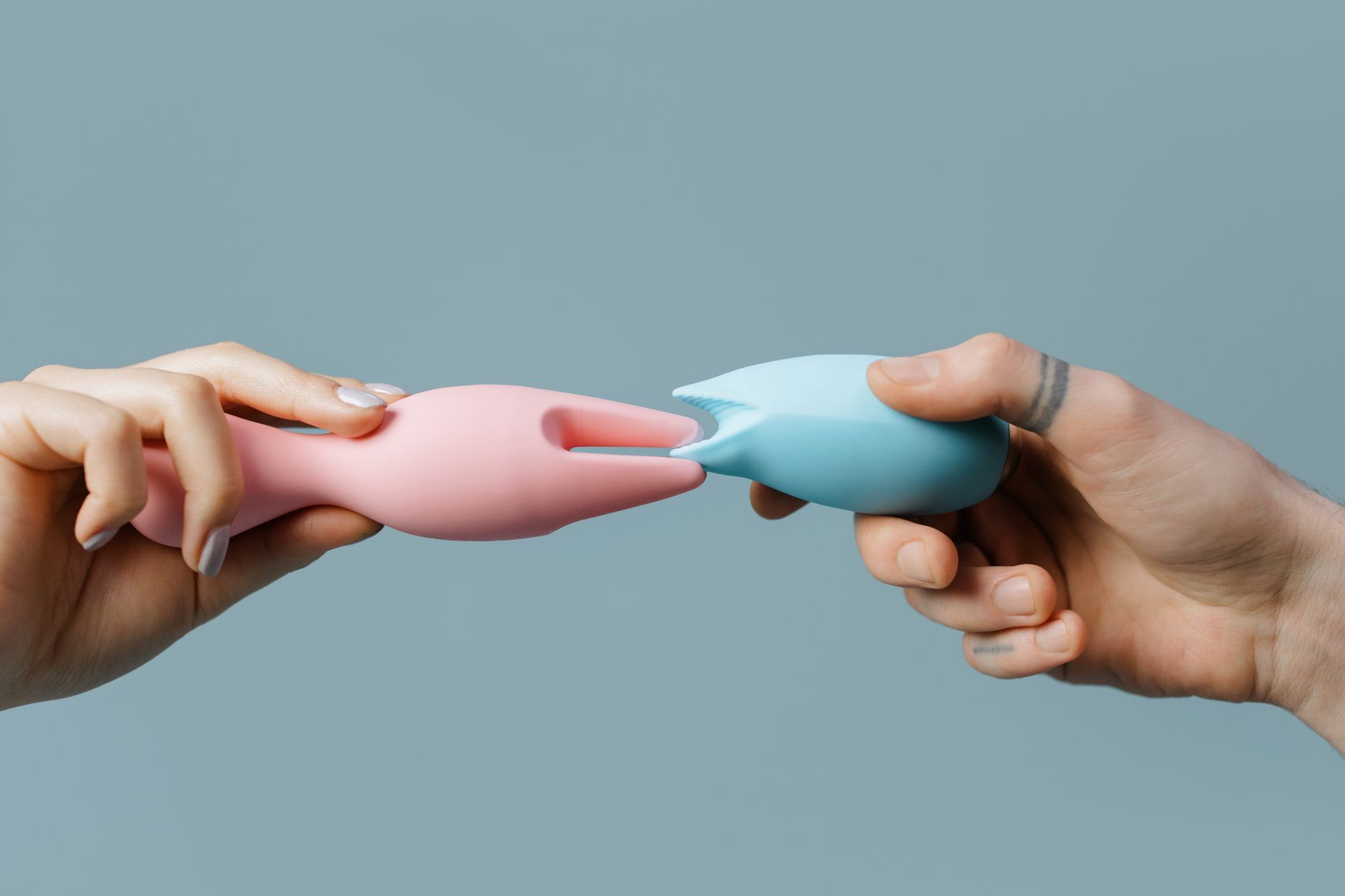
Photo by cottonbro studio on Pexels
The physical markers of returning desire
You don't have to feel like your old self to start using a vibrator. You just need to notice small signals that your body is waking up.
These include: spontaneous genital tingling (even micro-sensations count), noticing attractiveness in partners or strangers without judgment, a slight shift in energy when you think about sex, increased genital blood flow (some people describe it as a warm heaviness), or simply curiosity without accompanying shame.
If none of these are present yet, you're probably still in the acute phase of grief or depression. That's okay. Vibrators will be there when you're ready. Forcing pleasure before your nervous system is ready to receive it backfires.
Using lemon vibrators when emotions are close to the surface
One thing that surprises people is how emotional reconnecting with pleasure can be. You might start using a clitoral vibrator and find yourself crying. This happens because pleasure and grief live in adjacent neural pathways. Waking one can stir the other.
This is not a sign you're doing it wrong.
Let the emotions come. Keep using the vibrator at low intensity. Breathe. If you need to stop, stop. But don't interpret tears or sadness as a signal to abandon the whole project. You're essentially thawing, and thawing is messy.
Some people find that orgasms feel different when they return after depression. Shallower sometimes, or more concentrated in one spot instead of radiating. Some report that their first post-depression orgasms feel less intense than they remember. Again, this is normal. Your nervous system is recalibrating. It will deepen again with time.
Partnered reconnection after returning desire
If you have a partner, telling them you're ready to explore pleasure again is a separate conversation from using toys. You might say something like: "I'm starting to feel sexual sensation returning, and I want to reconnect with my body first before we explore together. It has nothing to do with you. It has everything to do with me remembering what pleasure feels like."
Then, when you're ready, you might invite them to watch, or use a lemon vibrator together, or simply hold you while you explore. Some partners need this involvement to feel included. Some feel relieved to see you healing. Some get defensive or impatient. If your partner can't hold space for your healing, that's information worth having.
How to use lemon vibrators with a new partner after years of monogamy explores this more deeply if you're navigating partnership during reconnection.
When to seek additional support
A vibrator is not therapy. If pleasure isn't returning after 8-12 weeks of gentle exploration, if you're still in acute depression, or if sex feels loaded with shame or pain, talk to a therapist who specializes in trauma or grief. Some people need both clinical support and physical reconnection. That's not a failure. That's being strategic about healing.
Similarly, if depression or grief returns after you've started reconnecting sexually, that's a signal that your mental health needs attention first. Vibrators work best when your nervous system is stable enough to receive sensation without being flooded.
The point of slow reconnection
Honestly, there's no rush. You don't have to be sexually active again by a certain date. You don't have to want your partner the way you did before. You don't have to hit specific milestones of "normal." Pleasure after depression is a different flavor than pleasure before it. That doesn't make it less real.
Lemon vibrators help because they let you reconnect at your own pace, alone, without performance pressure. They give your body permission to remember what it knows. And when you're ready, they bridge the gap between your healing nervous system and the pleasure that's been waiting for you all along.
People also ask
Is it normal to feel numb when using a vibrator after depression?
Yes. Depression literally blunts sensation. You might use a lemon vibrator and feel nothing at first, or feel tingling only occasionally. That numbness fades as your neurotransmitters rebalance. Keep exploring at low intensity without expectation. Sensation usually returns gradually, not all at once.
Can I use a clitoral vibrator while I'm still taking antidepressants?
Most antidepressants don't prevent pleasure, though some SSRIs can reduce sexual sensation or make orgasm harder. If you notice numbness worsening after starting medication, talk to your prescriber. Some people find that lower-intensity vibration helps overcome SSRI-related numbness. A lemon vibrator on pattern 1 or 2 is a good starting point.
How do I know if I'm actually ready to reconnect sexually or if I'm forcing it?
Ready feels like gentle curiosity without pressure. Forcing it feels like obligation, shame, or a need to "prove" you're better. If you're using a vibrator to demonstrate to your partner that you're healed, you're not ready yet. If you're using it because your body asked for sensation, that's readiness. Listen to that distinction.
Should my partner be present when I use a lemon vibrator to reconnect with desire?
Not necessarily. Solo exploration builds your own confidence and lets you rediscover your body without someone else's expectations in the room. Once you're comfortable alone, partnered exploration becomes a choice, not a performance. Some partners want to be involved from the start. Negotiate what feels right for both of you.
What if I reach orgasm again but it feels wrong or inauthentic?
Post-depression orgasms sometimes feel disconnected at first, like they're happening to someone else's body. This usually normalizes with time. If orgasm consistently feels inauthentic or triggering, slow down. You might be pushing faster than your nervous system can integrate. Return to sensation-only exploration for a few weeks, then reapproach gradually.
How long does it take for desire to fully return after depression or grief?
There's no timeline. For some people, a few weeks. For others, months or a year. Grief especially has no expiration date. Your desire might return fully, or it might settle at a different baseline than before. Both are okay. The goal isn't to get back to who you were. It's to find out who you are now.